Craft CMS website development services

Reliable Craft CMS delivery for agencies that need flexible content architecture, client-specific workflows, and scalable websites built for long-term ownership.
Scope Your Craft CMS Build

Engineering solutions to Craft CMS agency challenges

Craft CMS development services that reduce rework, simplify migrations, and keep agency delivery commercially predictable.
01
Content architecture doesn't scale with the website
Structured content models and workflows make websites easier to expand, manage, and maintain over time
02
Content freedom creates maintenance overhead
Content structures and editing experiences are designed for consistency across teams and content types.
03
Launch-day delivery fails, delaying projects
Integrations, performance, tracking, permissions, and QA are aligned into one predictable implementation process
04
Poor migrations create SEO and content losses
SEO signals and editorial workflows transition cleanly to help preserve visibility and publishing continuity
Scale Craft CMS delivery without growing your team
Order from $499

Craft CMS development services

Craft CMS delivery, structured around real project needs, from content modeling and migrations to multisite, headless builds, and ongoing support.
icon

Craft CMS website development

Custom Craft CMS sites built from approved designs and organized around maintainable content architecture
  • Agency-approved designs conversion into Twig templates
  • Component-based front-end development
  • Reusable content modules and components
  • Content structure and entry-type planning
  • Cross-browser/device QA
  • Staging environments for agency and client review rounds
icon

Content modeling and CMS architecture

Content models designed around editorial workflows and reuse management
  • Sections, Singles, Channels, Structures setup
  • Entry-type and Matrix field design
  • Custom fields and relationships
  • Editorial roles and permission configuration
  • CMS governance documentation
icon

Design-to-Craft implementation

Agency design files translated into production-ready Craft CMS templates front-ends
  • Figma/Sketch/PSD/XD implementation
  • Twig template and component mapping
  • Responsive behavior and scoped interactions
  • Pre-launch review and refinement
icon

Craft CMS migration

Transition for websites from WordPress, Drupal, Webflow, dated Craft implementations or legacy CMS platforms
  • Content audit, mapping, and migration strategy
  • Content restructuring and redirect implementation
  • Metadata, forms, analytics, and tracking continuity
  • Launch support and post-migration validation
icon

Integrations and API development

Craft CMS integrations that connect websites with the tools agencies and clients already use
  • CRM, analytics, marketing platform integrations
  • GA4 and GTM event tracking implementation
  • API-based data exchange
  • Search/content discovery features
  • Integration testing and data mapping
icon

Multisite and multilingual implementation

Craft CMS configurations, designed for agency clients operating across brands, regions, or languages.
  • Multisite architecture
  • Localized vs. shared content models
  • Editorial permissions, role separation
  • URL structure & translation workflow support
  • QA across locale variants
icon

Performance and accessibility support

Site audits and technical implementation focused on speed, usability, and long-term maintainability
  • Lighthouse-based performance review &fixes
  • Core Web Vitals improvements
  • Asset and template optimization
  • Semantic HTML, accessibility-conscious markup
  • WCAG-aligned implementation/remediation
icon

Conditional headless Craft CMS

A decoupled content architecture built to support multiple channels and modern front-end frameworks, where applicable
  • GraphQL configuration & schema planning
  • Content modeling for headless delivery
  • React/Next.js front-end integration
  • QA & deployment support
icon

Maintenance & post-launch support

Ongoing support for retained Craft CMS websites and day-to-day production changes
  • New pages, content adjustments
  • Bug fixes, integration updates
  • Security patching, performance reviews
  • Support documentation & handover

Craft CMS architecture that supports long-term ownership

GetDevDone treats content architecture, workflows, integrations, multisite, and headless delivery as connected decisions, helping agencies avoid complexity as websites mature.
Content relationships, taxonomies, and editorial workflows are established before implementing templates and page layouts
Publishing experiences we design, support day-to-day content management without creating unnecessary field sprawl or administrative overhead
Our architectural decisions focus on multisite, localization, integration strategies, and growth scenarios from the outset
Headless delivery, custom integrations, and advanced architecture patterns make sense only where they create practical results for the project
Delivery factors in content structures, dependencies, and platform evolution to support future updates and lasting performance
Keep complex Craft CMS projects commercially predictable
Order now

Why GetDevDone for Craft CMS development

Architecture decisions that prevent rework
GetDevDone maps content structures to real publishing needs upfront, so agencies don't pay for restructuring and migration fixes later
A delivery process that protects agency accountability
Our engineering team treats migrations, integrations, and QA as core deliverables, not afterthoughts, so issues don't surface after the client takes over
Production capacity that fits into the agency's process
White-label Craft CMS development expertise and experience, so agencies can add bandwidth and scale, while keeping the client relationship

Engagement models for Craft CMS development

From new builds, migrations to fixing up existing sites, or backing an agency's full client load, our Craft CMS website development services match the project's needs.
Project-based delivery (fixed price)
Defined Craft CMS delivery for finalized designs and clear requirements, with scope, timelines, and deliverables set before the work starts
Time & materials (flexible scope)
Responsive Craft CMS website development for shifting priorities: partial rebuilds, content cleanup, or developing market needs
Team extension
Dedicated Craft CMS production capacity for agencies working with several client projects, without extra hires or restructuring operations
Ongoing support
Retainer-based Craft CMS upkeep covering updates, new page builds, integrations, and production requests for the agency or its clients
Craft CMS delivery built around agency realities
Order from $499

Our Craft CMS development workflow

Controlled implementation that de-risks late-stage changes, delivery surprises, and avoidable rework across the project lifecycle.
Project goals and content requirements, integration and migration needs, and delivery risks are reviewed before implementation begins
Sections, entry types, together with Matrix fields, workflows, and technical architecture, are defined before development
Approved designs are translated into templates, components, content structures, and frontend experiences
Content migration, APIs, analytics, forms, and third-party systems are implemented and validated
Responsive behavior, CMS functionality, alongside accessibility, performance, integrations, and user flows are tested before launch
Deployment support, validation, tracking checks, and post-launch monitoring help reduce avoidable production issues
Documentation, content structure references, integration, and support notes are provided to support long-term ownership

Our work in client stories

How we turn complexity into real-world solutions for our clients.
image
Creative marketing agency
Story-first craft CMS that turns clicks into storytellers
A performant, editor-friendly Craft CMS site for Hallingcast boosted content discovery and visitor engagement. Responsive homepage with background video, category-filtered blog overview, and animated article templates support high-impact storytelling with minimal operational overhead.
image
Norwegian bioenergy company
Modern digital experience for a renewable energy provider
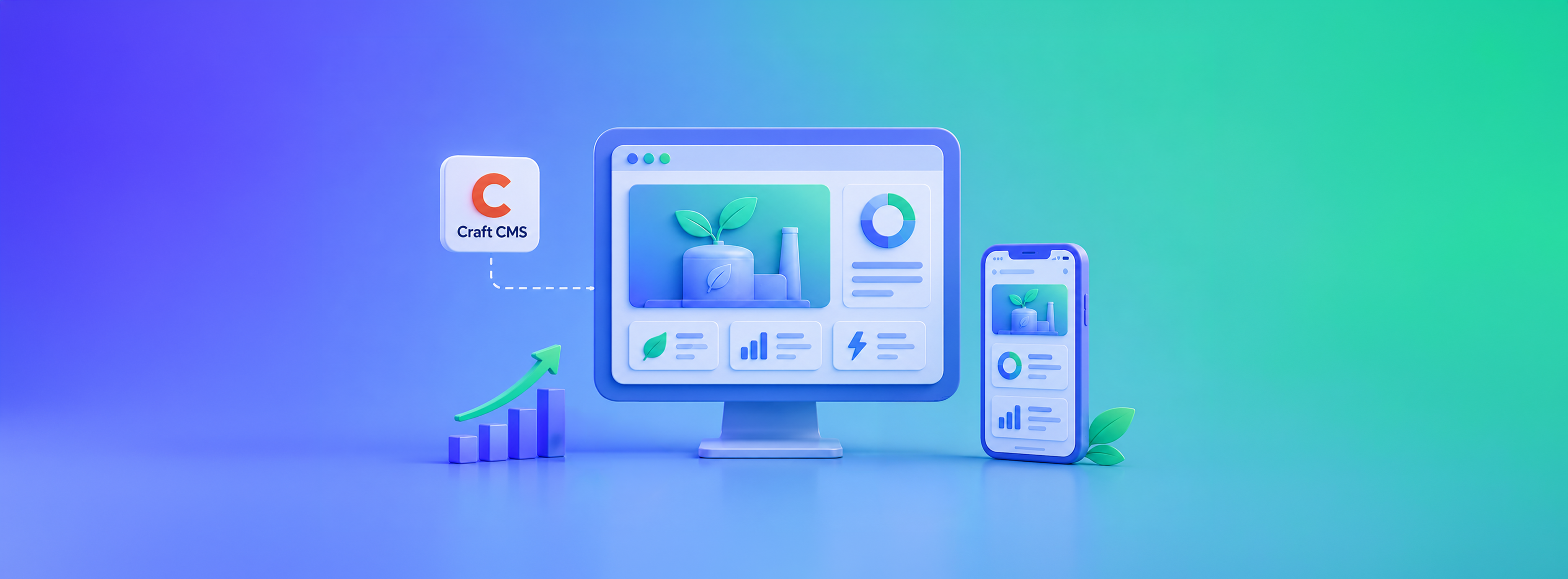
Hallingdal Flisterminal's custom website delivers a clear, user-friendly experience supported by a flexible Craft CMS architecture. Structured with Matrix fields, Globals, and Articles, the site is easy to manage, visually engaging, and fully responsive across devices.
image
Furniture components manufacturer
Craft CMS website for a better buying experience
Kantefølflak AS's website presents its edge-banding products through a clean, intuitive user experience. Structured product content and subtle interactive elements help visitors explore the stock range, while providing the team with a flexible platform for ongoing content management.

Tell us
where you
need help

Let’s remove friction in your next Craft CMS project together

Contact form

Drop files here to upload or
    By submitting your request, you agree to our Terms & Conditions, accept our Privacy Policy, and consent to the processing of your personal data.

    Our insights

    Practical analysis, direct thinking, clearly explained.
    image
    CMS development
    May 22nd, 2026
    Why Is Craft CMS a Perfect Choice for Growth-Oriented Brands?
    image
    CMS development
    March 10th, 2026
    Best headless CMS for agencies: Top platforms and selection framework for 2026
    image
    API / third-party integrations
    November 24th, 2025
    Why marketing agencies need tech partners to grow margins in 2026
    image
    Custom development
    May 22nd, 2026
    Our Website Development Process: 6 Steps from Request to Launch
    04/06

    FAQs

    Craft CMS development is usually a strong fit when a website requires custom content structures, flexible editorial workflows, and frontend implementation that is not constrained by prebuilt themes or page-builder limitations.
    Often, yes. Craft CMS works well for agency projects that require structured content, reusable page modules, localization, multilingual support, or custom publishing workflows. For short-lived campaign websites, with simple editing needs, a lighter CMS or a dedicated landing page builder is usually faster and cheaper to maintain.
    Craft CMS starts with content architecture and custom content modeling. WordPress often relies more heavily on themes and plugins, adapting the content model to fit. Craft is generally stronger when content structures, custom workflows, and editor experience are central requirements.
    Webflow is often faster for visual marketing websites. Craft CMS provides greater control over content architecture, integrations, custom logic, and long-term extensibility when project requirements become more complex.
    Cost depends on content model complexity, templates, integrations, migration scope, multilingual requirements, QA needs, and post-launch support. The most useful pricing conversation starts with designs, sitemap, content types, integration notes, and launch requirements. You can visit GetDevDone’s Order Now page for packaged pricing or fill out the form for a custom scope.
    Project timelines depend on whether the work involves a new build, migration, inherited website rescue, or ongoing support. The biggest schedule risks are usually content architecture decisions, integration complexity, migration cleanup, and QA requirements.
    Yes. Migration projects can include content mapping, template rebuilding, redirect planning, functionality replacement, integrations, QA, and launch support. The goal is usually to improve content architecture rather than replicate legacy structures exactly.
    Yes. The first step is a technical review of the current structure — content model, template logic, plugin dependencies, and known issues. From there, the decision is usually about what's worth fixing in place versus what should be rebuilt. Patching without that review tends to add technical debt instead of removing it.
    Yes. Craft CMS can be integrated with CRMs, analytics platforms, search services, and marketing systems, often interconnected for eCommerce needs. Successful delivery depends on clear data mapping, testing requirements, and workflow planning.
    Yes, particularly for custom, content-rich websites that require flexible content modeling, custom workflows, and maintainable architecture. The platform remains a strong choice when those requirements justify a more structured CMS approach.