Headless WordPress development services

Headless WordPress development services for agencies and brands that need WordPress as the content hub and a modern front-end built for real production use.
Let’s Discuss Your Project

Challenges we solve with headless WordPress development

A reliable headless WordPress agency's delivery partner for consistent handoffs, protected margins, and client relationships that stay intact.
01
WordPress sites struggle under growth and traffic
Front-ends built with modern frameworks and CDN delivery keep performance stable as content, features, and visitors scale
02
Content teams can’t work independently
Structured content models and reusable components give editors full control without needing developer changes for every update
03
Multi-channel publishing & complex integrations are hard
WordPress acts as a content API, serving the same data to web, apps, and other touchpoints while integrating cleanly with microservices and DXP layers
04
Every change risks stability & long-term maintenance
Decoupled architecture, standardized components, and controlled releases reduce technical debt and make updates safer and more predictable
Better performance, more flexibility, same familiar WordPress CMS
Order now

Headless WordPress development services by GetDevDone

User experience, technical work, and content delivery across platforms are lined up through headless WordPress website design, so the client only sees a stable website.

Headless readiness review

A technical fit check before committing to a headless path
  • Website requirements review
  • Traditional vs headless recommendation
  • Front-end, CMS, API, SEO, and hosting risk scan
  • Scope outline for build, migration, or modernization

WordPress CMS architecture

A back-end content structure that supports editing, reuse, and front-end delivery
  • Custom post types and fields
  • Gutenberg or block-based editing patterns
  • Reusable content structures
  • Roles, permissions, and publishing rules

API and data layer

A clean connection between WordPress, the front-end, and external systems
  • WordPress REST API setup
  • GraphQL or WPGraphQL when scoped
  • API contracts for front-end delivery
  • Integration mapping and data validation

Front-end implementation

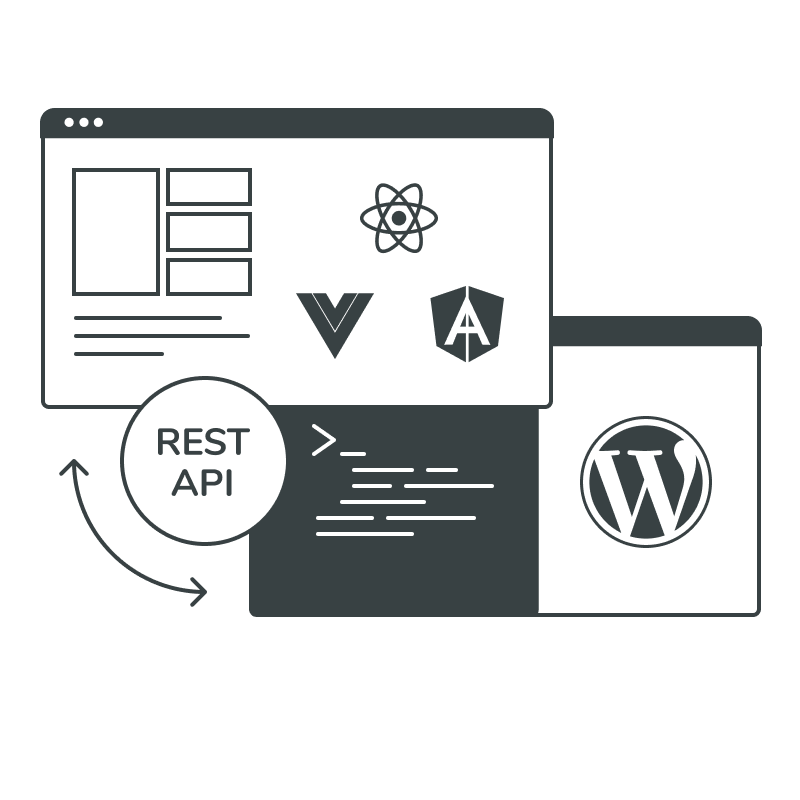
A decoupled React, Next.js, and Vue front-end built around the approved design and project logic
  • Component-based front-end development
  • Routing and template implementation
  • Responsive behavior across breakpoints
  • Front-end performance and accessibility-aware checks

Traditional to headless WordPress migration

A controlled move from theme-based WordPress to a decoupled architecture
  • Content review & migration planning
  • URL, metadata, redirect mapping
  • Front-end rebuild around existing/ revised designs
  • QA across content, templates, publishing flows

Integrations

Connections between the headless WordPress site and the systems already in the client stack
  • CRM & marketing platform integrations
  • Analytics & tracking setup support
  • Forms, search, third-party API connections
  • Data flow testing across connected systems

QA & launch readiness

Production checks before the website handoff to the client
  • Cross-browser and device QA
  • Accessibility-aware review
  • Performance audit with Lighthouse
  • Staging validation and deployment support

Maintenance and support

Post-launch coverage for both the WordPress back-end and the decoupled front-end together with scoped performance monitoring
  • Dependency updates
  • CMS support
  • API checks
  • Bug fixes and controlled improvements

Agency wins with headless WordPress development

GetDevDone, a headless WordPress development company, turns technical complexity into manageable, predictable delivery.
Fast time-to-market for new channels & campaigns
A single content API powering web, apps, and other touchpoints lets you launch new experiences and campaigns faster without rebuilding content or integrations
Higher content team productivity & lower reliance on developers
Structured models and reusable components help marketing to publish, update, and scale work independently with minimum operational backlog
More predictable project outcomes & long-term cost control
Standardized white-label delivery, testing, and controlled releases remove technical debt, rework, and maintenance overhead, keeping budgets and timelines under control
Headless WordPress development for teams who need speed, flexibility, and content control
Order now

Engagement models for headless WordPress projects

Headless WordPress development services with GetDevDone match the engagement model to the scope and project requirements before the work starts.
Project-based delivery (fixed scope)
Ideal for approved designs, defined page types, clear integrations, and agreed acceptance criteria, where delivery stays structured around predictable results
Time & materials (flexible scope)
Fits projects where technical decisions depend on what the existing site reveals across discovery, refactoring, legacy analysis, or migration planning
Team extension for agency overflow
Works well when the agency keeps strategy, design, and client ownership, while a trusted headless WordPress website company supports the implementation
Maintenance or retainer (ongoing WordPress support)
Suited for post-launch updates, dependency management, bug fixes, API checks, CMS support, and controlled improvements across both the front-end and CMS layers

Headless WordPress website development workflow

GetDevDone delivers headless WordPress development services through early decisions and controlled execution, keeping architecture, WordPress as back-end CMS behavior, front-end build, QA, deployment, and handoff connected from the start.
Project goals, approved designs, client editing needs, integrations, SEO requirements, hosting preferences, and delivery risks are reviewed before the build path is confirmed
Page types, content structures, fields, reusable blocks, relationships, and API contracts, defined and mapped upfront, so the front-end receives the right content in the right format
React, Next.js, or Vue implementation moves from approved designs into responsive, component-based code, with routing and template logic included
WordPress is configured for the client's content process, including structured editing, draft handling, preview behavior, and practical publishing rules
The build is checked across devices, browsers, content states, front-end behavior, accessibility basics, metadata, redirects, and performance signals
Staging, release coordination, environment checks, and launch support, followed by implementation notes, CMS guidance, and API references for future maintenance
Updates, bug fixes, API checks, dependency work, performance monitoring, and maintenance can continue under an agreed support scope

Our work in client stories

How we turn complexity into real-world solutions for our clients.
image
Swiss brand comms consultancy
From design to live in 22 days: Powering Up&up’s market entry
Up&up Consulting went live with a high-performance, bilingual WordPress site in a month, helping the agency build credibility, support client acquisition, and scale without technical overhead or cost overruns.

image
Global creative platform
Full WordPress delivery for Eezy in 9 days
Creative platform Eezy launched a fully redesigned WordPress site on time and within budget, giving their marketing team complete content control and the freedom to grow without depending on technical complexity.
image
Polish marine marketplace
Turning interest into itineraries with a conversion-ready website
A mobile-first, accessible website for Dinghy Daily Charter launched in 16 business days, boosts the booking experience, strengthens conversions, and supports revenue growth across devices.

Headless
WordPress
project on
the table?

Define the architecture. Protect the editing flow. Build a front-end that holds up.

Let’s discuss your project

Drop files here to upload or
    By submitting your request, you agree to our Terms & Conditions, accept our Privacy Policy, and consent to the processing of your personal data.

    Our insights

    Practical analysis, direct thinking, clearly explained.
    image
    Guide
    May 23rd, 2026
    Common WordPress Problems Agencies Inherit From Clients, and Which Ones Need More Than a Quick Fix
    image
    Comparison
    March 10th, 2026
    Best headless CMS for agencies: Top platforms and selection framework for 2026
    image
    Comparison
    February 11th, 2026
    Best headless CMS for React: Comprehensive comparison guide (2026)
    image
    Guide
    March 6th, 2026
    Is Headless WordPress Right for Your Project? Hands-On Experiences & Strategies
    image
    Insights
    April 12th, 2024
    Headless WordPress for client projects: 5 mistakes agencies should avoid
    image
    Insights
    May 25th, 2026
    Signs Your Agency Needs a White-Label WordPress Development Partner
    image
    Pricing & Cost
    February 24th, 2026
    WordPress website cost in 2026: a realistic budget from DIY to custom builds
    image
    Comparison
    May 22nd, 2026
    5 Best Headless WordPress eCommerce Platforms
    04/06

    FAQs

    An agency should recommend headless WordPress development services when the client needs more front-end control, stronger performance flexibility, structured content reuse, or integrations that a traditional WordPress theme cannot support cleanly. For simpler marketing websites, a well-built traditional WordPress setup may be easier to manage and less expensive to maintain.
    Our expert take as a headless WordPress website design agency is that a decoupled WordPress can be worth it in 2026 when the marketing website needs complex front-end behavior, reusable content, high-performance control, or multi-channel publishing. It is usually not worth the added scope when the website mainly needs standard pages, simple editing, and common WordPress plugins rather than a full headless WordPress website development project.
    Decoupled WordPress usually costs more than a standard WordPress theme build because it includes both the WordPress back-end and a separate front-end application. Cost depends on content modeling, number of templates, front-end complexity, integrations, preview setup, migration work, QA, and post-launch support. A headless WordPress website company or headless WordPress development agency typically budgets this as a full modernization project rather than a theme tweak.
    A headless WordPress website development project usually takes longer than a comparable traditional WordPress build because architecture, API work, front-end development, SEO controls, and QA need to be coordinated. Timeline depends on page types, content structures, integrations, migration needs, and the quality of the design and content handoff.
    GetDevDone’s experience in headless WordPress development services shows that the biggest risks are weak content modeling, unclear preview workflows, plugin assumptions that do not work in headless, SEO rendering issues, loose API contracts, and front-end code that is hard to maintain. Agencies should choose a partner- a headless WordPress development company that can explain how these risks are handled before development starts.
    Headless WordPress is better when the project needs custom front-end architecture, stronger performance control, reusable content, or complex integrations. Traditional WordPress is often better when the client needs fast delivery, familiar plugins, simple editing, and lower maintenance.
    Yes. Migration to headless WordPress fits GetDevDone’s website modernization scope when the project involves moving an outdated or limited WordPress site into a decoupled setup. The scope should include content review, URL and SEO risk planning, front-end rebuild, API setup, QA, deployment support, and handoff.
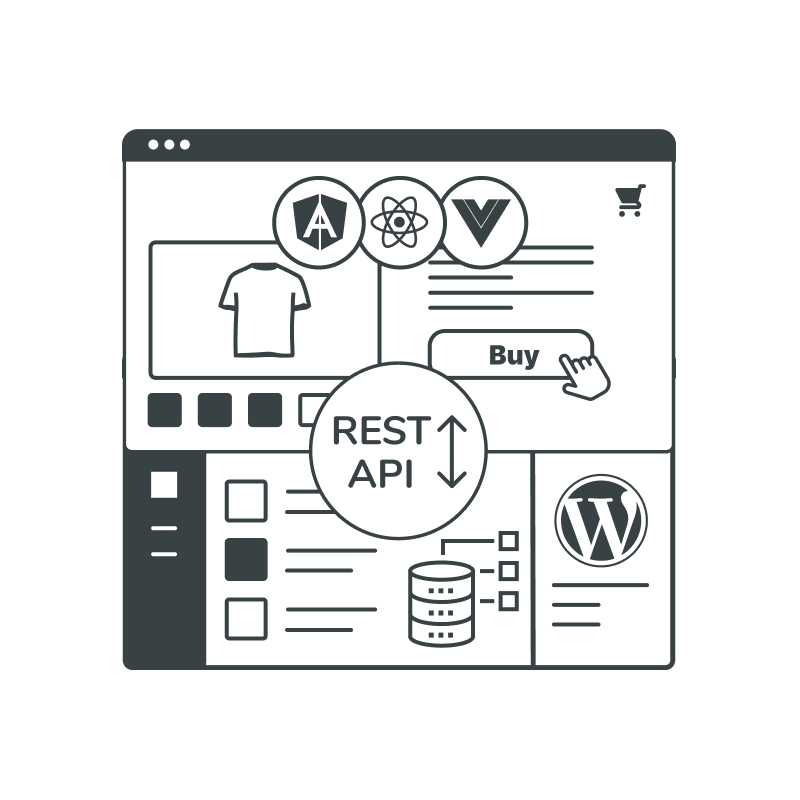
    Headless WordPress can work with WooCommerce, but eCommerce adds extra scope around product data, cart, checkout, payments, shipping, tracking, and performance. If the storefront is central to the project, GetDevDone normally scopes the build as an eCommerce engineering project rather than headless WordPress website development.
    An agency should prepare approved designs, content requirements, page types, integration needs, SEO requirements, analytics needs, hosting preferences, and client editing constraints. A clear handoff reduces rework because headless projects call for early decisions about CMS structure, APIs, front-end behavior, and deployment.
    Yes. Post-launch support can include updates, bug fixes, security patches, performance monitoring, CMS support, API checks, and ongoing reliability, as outlined in the project agreement. For headless builds, support should cover both the WordPress back-end and the decoupled front-end layer.