Headless eCommerce platforms are the right choice when your business needs flexibility, omnichannel delivery, and scalability, but they add architectural complexity and are not the best fit for every store.
Choose headless when your business requires custom storefronts, omnichannel experiences, or independent scaling of front-end and back-end systems
Match the platform to your business size, technical maturity, and commerce model instead of choosing the most feature-rich option
Pair a headless CMS with your commerce engine to manage content independently while delivering it across websites, apps, and other digital channels
Avoid headless for smaller or straightforward eCommerce stores, where traditional platforms provide a faster launch with lower operational complexity
Plan API integrations, front-end architecture, data migration, team ownership, and security before starting a headless implementation
73% of businesses today are using headless website architecture, yet most still treat it like experimental technology. Simple as it is: if your site takes more than three seconds to load, 57% of your customers have already left. That’s a technology issue turning into a precarious revenue problem.
The global headless commerce market reached $1.74 billion in 2025 and is projected to hit $7.16 billion by 2032, growing at 22.4% annually. The numbers indicate that many of your competitors are already moving faster than your current platform might allow.
What is a headless eCommerce platform?
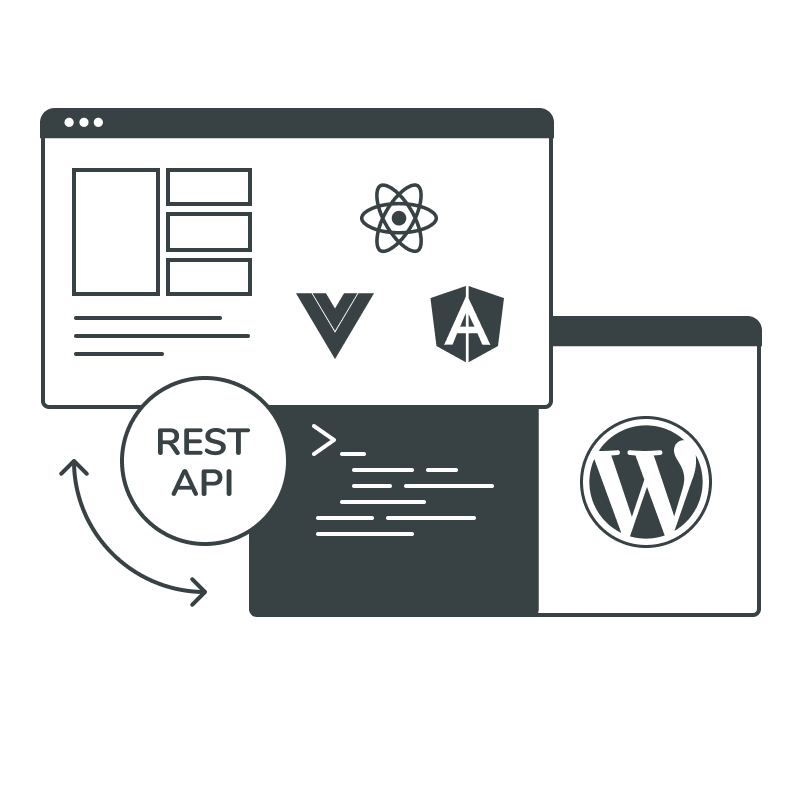
A headless eCommerce platform separates your storefront (front-end) from your commerce engine (back-end). They communicate through APIs instead of being welded together in a monolithic system. This means your developers can build whatever customer experience you need, from web, mobile, smartwatch to in-store kiosk, all without touching the back-end systems managing orders, inventory, and pricing.
Think of it this way: traditional platforms are like buying a house where the plumbing, walls, and roof are permanently attached. Change one thing, break three others. Headless commerce gives you modular components you can rearrange, replace, or upgrade independently.
On the technical side, the API-first architecture uses RESTful or GraphQL APIs to shuttle data between systems. Your front-end requests product data, the back-end responds through the API, and customers see a lightning-fast interface. Your back-end keeps processing orders regardless of what’s happening on the customer-facing side.
How headless commerce works
In a composable headless setup, you’re assembling the best-fitting tools instead of accepting whatever your platform vendor bundled together five years ago. Your stack might include:
Commerce engine (Shopify Plus, BigCommerce, Commercetools) handling transactions and inventory
CMS (Contentful, Sanity, Strapi) managing content across channels
PIM (Product Information Management) centralizing product data
Each component talks to the others via APIs. When one needs upgrading or replacing, you swap it out without rebuilding everything else.
As a tradeoff, you gain flexibility but accept complexity. Traditional eCommerce platforms handle integration for you. Headless platforms require you to handle it yourself or hire professional engineers who can.
Headless CMS for eCommerce
In a modern eCommerce development setup, a headless CMS (Content Management System) sits at the center of many content operations. It separates content management from the commerce engine, so teams can update stories, product descriptions, and campaigns without touching anything transactional. Platforms like Contentful, Sanity, Strapi, and even headless WordPress or Adobe Experience Manager, when used headlessly, expose content through APIs that deliver it to websites, apps, kiosks, or any future channel you choose to support.
This model gives marketers and editors the tools they already know, while allowing developers to build fast, flexible front-ends. A headless CMS keeps content scalable and independent of checkout flows or product logic, resulting in a storefront where teams can move faster, test ideas freely, and keep the shopping experience uninterrupted.
For years, headless commerce was treated as a technical curiosity, something experimental teams or high-octane DTC (direct-to-consumer) brands used to push boundaries. But as eCommerce scaled and customer expectations hardened, motivations changed. Headless grew from an indulgence into a structural response to performance constraints, omnichannel fragmentation, and the speed at which digital commerce now moves.
Speed that converts
Performance is still the number one reason eCommerce businesses abandon monolithic platforms. Traffic spikes are harder to predict, campaigns move at the speed of social, and shoppers drop off the moment pages feel sluggish.
LARQ, a self-purifying drinkware brand, switched to a headless BigCommerce setup to get tighter control over storefront speed and UX. The move helped them lift conversion by 80% in three months, grow revenue 400% year over year, and run four regional storefronts from a single domain, all launched in about two months.
Nike, in athletic footwear and apparel, rebuilt its global storefront on a headless architecture to deliver a genuinely mobile-first experience and unify its customization journey across web, app, and in-store screens. The value is a faster, more consistent buying experience that matches how people actually shop.
Sephora, the beauty retail giant, went API-first early so it could speed up both site and app interactions. Headless made it possible to roll out UI and personalization changes quickly, turning performance tweaks from risky projects into routine levers for conversion.
Omnichannel without the operational headache
Customers don’t care which platform you’re on or where your back-end lives. They want their cart, offers, and product story to be the same on their phone, laptop, and in-store screen. Headless solves this by centralizing logic while letting each touchpoint consume exactly what it needs.
Bosch Power Tools, a professional equipment business, adopted a headless content layer to keep digital experiences consistent across dozens of markets and devices without cloning and re-maintaining separate sites. The result is one core logic and brand story, expressed locally where needed.
Lancôme, a global beauty and cosmetics brand, used a headless PWA approach to redesign its mobile experience and saw conversions increase by about 17%, along with major gains in mobile sessions. The real win: a single experience that feels native on every device instead of juggling separate “mobile” and “desktop” realities.
Tesla, in electric vehicles, uses a headless setup to power its real-time configurator across web, mobile, and showroom displays. One configuration journey follows the customer across channels, turning what could be a fragmented, high-friction process into a single continuous experience.
Developer velocity as an edge
Monolithic platforms slow capable teams down: design waits for dev, dev waits for back-end, back-end avoids changes that might break the storefront. Headless flips that dynamic and allows teams to move in parallel and ship without stepping on each other.
Michael Kors, in fashion and accessories, saw its localized stores roll out faster once it shifted to a headless model. Teams reused components across markets and finally aligned release cycles with merchandising and campaign calendars, instead of the other way around.
K2 Sports, an outdoor and winter sports group, moved from a constrained legacy platform to a headless stack. They launched eight brands and sixteen sites in under nine months, created sites 75% faster, and published content 90%faster, turning a complex multi-brand setup into something their teams could actually keep up with.
Canvas 1839, a premium CBD brand, adopted BigCommerce with a modern headless front-end so developers could work with the tools they preferred and marketers could push campaigns live quickly. The value wasn’t the tech stack nameplates, but the ability to ship new product pages and experiences in days instead of weeks while keeping a stable commerce back-end.
Future-proofing the commerce stack
The digital storefront stopped being just a website long ago. It’s an app, a marketplace, a live video, a kiosk, a voice assistant, an AR try-on, an IoT device, and whatever comes next. Headless exists so you can plug in those new surfaces without tearing your core apart every time.
Target, an American mass retailer, adopted a headless approach after seeing customers start journeys on one device and finish on another. A decoupled setup lets the retailer unify the experience and lift conversion by making it easier for shoppers to complete purchases regardless of where they started.
Samsung, a heavyweight of consumer electronics, uses a headless live virtual assistant experience that lets U.S. shoppers get one-way video consultations, product demos, and purchasing support across digital and in-store touchpoints. The headless layer behind it keeps those experiences adaptable as channels and expectations evolve.
VTEX’s client base shows this pattern at a global scale. Brands across retail, CPG, electronics, and beauty (from Sony and Whirlpool to Coca-Cola and Walmart) use its headless, cloud-native platform to run complex B2B and B2C operations, expand into new markets, and add channels without restarting their architecture every few years.
Together, these examples show why headless is about fit rather than trend: faster experiences, coherent journeys, teams that can actually ship, and a stack that doesn’t collapse every time you add a new way to buy.
As infrastructure budgets tighten and teams push for systems that can mature without frequent rebuilds, eCommerce businesses increasingly favor models that reduce operational friction rather than add to it.
Best headless eCommerce platforms for 2026
Choosing the right headless commerce platform comes down to how much flexibility, complexity, and engineering ownership your business can support. The comparison below highlights how each platform operates in a headless architecture, what it does well, and where its trade-offs start to matter as teams scale.
Headless eCommerce platform comparison
Platform
Type & architecture
Key strengths (headless only)
Limitations/trade-offs
Best fit/typical use cases
BetterCommerce
SaaS, API-first suite with native commerce, PIM, OMS, CMS
Highly flexible microservices; granular APIs for custom workflows; supports multi-region, multi-brand, large catalogs; integrates naturally with enterprise headless CMS.
High cost; long implementations; requires high engineering maturity.
Large enterprises with complex workflows and dedicated engineering.
Shopify Plus + Hydrogen/Oxygen
SaaS back-end + React storefront + edge hosting
Fast headless deployment; Hydrogen enables custom storefronts; Shopify handles payments, PCI, scaling; works well with headless CMS for content-rich commerce.
Limited for deep B2B logic or very complex catalogs; requires React developers.
Robust APIs for catalog, cart, checkout, and B2B; multi-storefront support; easy pairing with headless CMS; strong balance of flexibility and SaaS simplicity.
Less extensible than pure MACH; the front-end requires developers.
Mid-market B2B/B2C; 50–5,000 SKUs; multi-store retailers wanting enterprise features with moderate complexity.
Elastic Path
API-driven commerce with advanced catalog & pricing
Excellent for subscriptions, bundles, and dynamic product structures; flexible pricing logic; integrates well with headless CMS for high-content journeys.
Marketplaces; localized multi-store setups; PHP development teams.
Headless CMS options that pair well with modern eCommerce
A modern eCommerce stack works best when the craft CMS development and the commerce engine each focus on what they do best. The commerce engine handles products, pricing, and transactions; the CMS shapes the brand story around them. With a headless CMS, you can create content once and deliver it anywhere: your storefront, mobile app, landing pages, or any new channel you introduce.
Used together, these systems help teams build richer experiences without slowing down merchandising or editorial workflows. Below is an overview of CMS platforms commonly used in headless setups, each offering a different balance of flexibility, editorial control, and technical depth.
Advantages of modern headless CMS
Content editors can use intuitive admin interfaces or integrate with familiar workflows like Google Docs
Cloud-based solutions provide automatic security updates and built-in protection, including DDoS defense
Better scalability and performance management options compared to traditional CMS
Suitable for large content-driven sites with heavy filtering and search needs (news aggregators, booking platforms)
Previews available on either the headless CMS back-end or the front-end, depending on implementation
Version control and content revisions work similarly to a traditional CMS
These systems help teams build richer experiences without slowing down merchandising or editorial workflows.
Some headless solutions lack built-in form builders and require more developer work for previews and image optimization, as well as maintaining the front-end.
Headless CMS can be more expensive, especially in cloud subscription models.
The CMS itself doesn’t inherently speed up time-to-market or improve SEO; load times and delivery speeds are often comparable to traditional CMS.
Below is an overview of CMS platforms commonly used in headless setups, each offering a different balance of flexibility, editorial control, and technical depth.
Best headless CMS for eCommerce comparison
CMS
Type
Strengths in headless mode
Limitations in headless mode
Best fit
WordPress (headless)
Hybrid CMS (traditional + headless option)
Familiar editor UI; massive plugin ecosystem; REST and GraphQL (via plugins); low switching cost for teams already using WP.
Not API-native; performance and security depend on plugins; more DevOps effort at scale.
Teams wanting a gradual transition to headless while keeping WordPress workflows.
Contentful
API-native headless CMS (SaaS)
Strong, structured content modeling;high API performance; enterprise reliability,;excellent integrations.
Can get expensive at scale; requires setup for visual previews.
Mid-market & enterprise teams needing scalable multi-channel content delivery and governance.
High cost; complex implementation; specialist expertise required.
Global enterprises with multi-brand, personalized, large-scale content operations.
Craft CMS (headless mode)
Hybrid CMS with strong decoupled support
Excellent custom content modeling; clean authoring experience; lightweight + flexible; good GraphQL support via CraftQL or native API.
Not API-native; requires configuration for headless; smaller enterprise footprint.
Mid-market teams wanting a balance of editorial usability and flexible headless delivery.
Hygraph (formerly GraphCMS)
API-native headless CMS (GraphQL- first SaaS)
Fast GraphQL API; excellent schema flexibility; strong for complex relationships; performant at scale; developer-friendly.
Less accessible for non-technical editors than a visual-first CMS; cost scales with usage.
Teams building dynamic, highly structured, API-heavy digital experiences.
Storyblok
Visual-first headless CMS
Visual page builder + full headless APIs; strong for marketers; flexible content components; multilingual capabilities.
Less customizable than pure developer-led CMSs; complex schemas require planning.
Brands looking for headless flexibility with a marketer-friendly visual editor.
How to choose your headless eCommerce platform
The headless platform choice is grounded in matching the system to how you operate and plan to scale. Each platform optimizes for something different: speed, flexibility, B2B depth, or developer control.
Your commercial model, team capabilities, and required complexity should guide the decision. The matrix below distills these factors into a practical fit, helping you avoid overbuying, underbuilding, or committing to an architecture your team can’t comfortably run.
Headless eCommerce platform selection matrix
Decision category
Your setup
Recommended platforms
Reasoning / Fit
Business size
Startup ($0–$5M revenue)
Traditional platforms (Shopify, Shopify Basic/Advanced, Wix, Squarespace)
Lower cost, fast setup, and minimal engineering make sense for early-stage teams; headless only applies when a real technical need exists.
Mid-market ($5M–$100M revenue)
BetterCommerce, BigCommerce, Shopify Plus
API-first platforms with strong headless support, solid B2B features, and and modular options.
Enterprise-grade platforms built for scale, multi-region operations, and deep customization.
Technical maturity
Limited technical resources
Shopify Plus, BigCommerce
Strong out-of-the-box capabilities with large ecosystems and prebuilt storefront frameworks, reducing engineering effort.
Experienced in-house engineering
BetterCommerce, commercetools
BetterCommerce balances configurability with usability; commercetools provides maximum extensibility for teams able to maintain composable architectures.
Developer-first organization
Medusa, Saleor (open-source)
Open-source headless frameworks for custom builds, offering full control and extensibility.
Business model
Pure B2C
Shopify Plus, BigCommerce
Best for consumer brands needing speed, personalization, and rapid iteration; both support headless storefronts and omnichannel delivery.
Complex B2B
BetterCommerce, Commercetools
Strong APIs for customer-specific pricing, workflows, quoting, catalog segmentation, and B2B governanceю
Hybrid B2B/B2C
BetterCommerce, BigCommerce
BigCommerce is a leading mid-market hybrid headless option; BetterCommerce provides deeper B2B tools with flexible B2C experiences.
Subscriptions/bundles
Elastic Path
Designed for complex product models, like configurations, bundles, and subscriptions via an API-first catalog engine.
Real example:GetDevDone brings eCommerce engineering solutions that help businesses move from restrictive platforms to more flexible headless architectures.
The team builds API-first storefronts with fast, decoupled front-ends that connect smoothly to commerce systems and the operational tools companies already rely on. This makes it easier to improve performance, ship updates quickly, and grow without being boxed in by a single vendor’s limits.
When headless isn’t the right fit for eCommerce
Headless gives sophisticated teams creative and architectural freedom, but it introduces real operational overhead. For many retailers, especially those with straightforward needs, the added complexity outweighs the upside.
Overkill for smaller sites or early-stage stores
Most early-stage eCommerce businesses don’t need multi-region deployments, custom storefronts, or omnichannel orchestration. For these teams, designing and maintaining a headless stack becomes costlier and slower than using a traditional platform. Shopify, BigCommerce’s native storefronts, WooCommerce, or WordPress development typically offer a faster, cheaper launch with far fewer technical dependencies.
Increased architectural complexity
In headless commerce, the storefront, checkout, and back-end engine operate as separate services connected via APIs. This creates more moving parts to monitor and more engineering discipline required to keep the customer experience seamless. Retailers used to theme-based platforms, where everything clicks together at once, often find this leap in complexity pretty daunting.
Higher development costs for core eCommerce functionality
Headless requires rebuilding core storefront elements that monolithic platforms include by default: product listing pages, search, promotions, checkout flows, and page templates. On top of that, many headless components (CMS, search, cart, personalization) use usage-based pricing, so costs rise with traffic and catalog growth. Traditional platforms avoid this by packaging these essentials and keeping pricing more predictable.
Loss of native site-building and merchandising tools
Platforms like Shopify, WooCommerce, and Adobe Commerce (formerly Magento Commerce) ship with everyday tools, like reviews, filters, image optimization, form builders, product galleries, and visual merchandising features. In a headless setup, none of these come built in. Every convenience becomes an integration or a custom build, which increases maintenance and places more operational burden on development teams.
Operational burden for non-technical teams
Headless systems rely on structured content models and API-driven data rather than drag-and-drop editors or real-time previews. Without additional tooling, everyday tasks, like updating banners, adjusting product copy, and launching promotions, can feel slower and less intuitive for non-technical teams. This friction is common unless the headless CMS experience is intentionally designed around editorial needs.
Not always faster for time-to-market
Headless doesn’t guarantee quicker launches or better SEO. While the front-end can be optimized for performance, the development required to recreate storefront functionality often slows early rollout. For teams without an established technical foundation, headless can delay instead of speeding up go-to-market timelines.
Implementation checklist for eCommerce
A successful headless build starts with clarity, because the platform only works when every integration, workflow, and team responsibility is mapped before the first sprint begins. Before you start building:
Map your API requirements. What data needs to flow where? Document integrations before choosing platforms. Headless implementations typically require more upfront development time and integration effort.
Choose your front-end framework. React dominates (Shopify Hydrogen uses it), but Vue.js and Angular work depending on team expertise. Consider your team’s existing skills and standardization goals.
Set performance baselines. Measure current load times, conversion rates, and bounce rates. You’ll need these to prove ROI. Headless doesn’t automatically mean faster; the implementation quality matters.
Plan data migration. Product data, customer accounts, order history – map the transition before you need it. Migrating from traditional CMS to headless CMS calls for dedicated development resources.
Integration architecture. ERP, PIM, CRM, payment gateways, fulfillment systems – diagram how everything connects. Consider how content workflows will integrate (admin UI, Google Docs workflows, preview systems).
Team structure. Who owns what? Front-end developers, back-end engineers, DevOps, and business users need clear responsibilities. Plan for increased developer involvement, especially for building and maintaining the front-end.
Security and maintenance planning. Determine if you’ll use cloud-based solutions with automatic updates or self-hosted options requiring manual management. Traditional platforms need manual plugin and system updates to fix vulnerabilities; cloud headless providers typically offer automatic security updates.
The bottom line
Headless commerce and the headless CMS ecosystem around it are becoming a long-term part of how modern eCommerce gets built. Adoption is growing across retail, B2B, and enterprise, and investment continues to flow into platforms that support API-driven architectures.
Still, headless isn’t the right answer for every business. Smaller stores with more straightforward needs often move faster and spend less on traditional platforms. Mid-market companies with real growth plans and some engineering muscle tend to get the best balance of flexibility and speed. Large organizations with complex requirements finally gain the control and scalability their older systems struggled to deliver.
The decision about headless comes down to whether it fits your business model, your team’s capabilities, and the growth you’re aiming for. When those pieces line up, the right architecture and eCommerce platform become clear.
FAQs
The best headless eCommerce platforms outperform legacy stacks because they treat commerce as infrastructure, as opposed to a template. Instead of forcing your storefront, checkout, CMS, and merchandising into one rigid box, headless platforms let each service (content, catalog, pricing, personalization) scale independently.
For high-growth brands, the real unlock is latency control and workflow freedom. As a result, your front-end team ships fast, your back-end team iterates safely, and your ops team avoids any failure cascade across the stack.
A strong headless CMS for eCommerce provides operational alignment on top of flexible content modeling. It supports multi-region publishing without breaking product data, lets non-technical teams launch seasonal campaigns without developer bottlenecks, and integrates cleanly with your PIM, pricing engine, and personalization layer. The best headless CMS for eCommerce becomes a functioning tool that lowers coordination costs, speeds up approvals, and keeps brand and product data in sync across every channel.
eCommerce leaders turn to headless because scaling and flexibility constraints start to stack up: slow update cycles, performance caps, and platform limits that block growth. As teams push for faster experimentation, multi-storefront expansion, and deeper personalization, monolithic systems can’t keep pace. Headless architecture can potentially remove these bottlenecks, giving brands the freedom to ship changes quickly, improve performance at scale, and build customer experiences without fighting the underlying platform.
A true best-in-class headless commerce approach uses composable governance on top of decoupled services. Besides splitting front-end and back-end, you need visibility into API limits, content versioning, caching strategy, and automated rollback pathways.
The best headless commerce platforms give engineering and business teams shared control surfaces for testing, monitoring, and orchestrating customer experiences across devices.
eCommerce CEOs often measure ROI through conversion rate and page speed alone. After migrating to headless eCommerce platforms, look for:
Reduced deployment-to-impact time (how fast changes reach customers)
Lower cost per experiment (headless makes testing cheap)
Higher merchandising agility (campaign teams ship daily, not weekly)
Improved uptime during peak traffic
When these indicators move, you’re operating closer to real digital commerce economics.
GetDevDone delivers modern headless and decoupled architectures using React, Vue, and Angular front-ends paired with WordPress, Shopify Plus, BigCommerce, and custom CMS backends
Our team specializes in API-first storefronts, JAMstack implementations, and omnichannel content delivery systems that separate presentation from content management for maximum flexibility and performance. We handle everything from migration to headless setups to custom headless CMS solutions, with proven success across industries and verticals.
If you’re considering a headless approach for your next project or need to evaluate whether decoupling makes sense for your eCommerce business, contact us. We’ll walk you through the technical and business considerations based on your specific requirements.
Compare the best headless CMS for React: Storyblok, Sanity, Hygraph, Strapi, Contentful, Prismic, and more with features, use cases, and selection criteria.
How to capture agency’s margins and client retention with a marketing technology partner. Real numbers and tips on how to scale delivery and stay relevant and safe.
TL;DR Agencies grow by building better production systems, not just hiring more people. Data from 285 agencies shows that structured, standardized processes make results predictable and protect a healthy 12% profit margin. Every decade rewrites the rules of agency growth.A few years ago, it was scale through people — more designers,…
Have you heard about headless WordPress and wonder if it's just another tech trend or a real game-changer for your project? Our comprehensive guide dives deep, providing first-hand insights and real-world perspectives.
Talk to a commerce advisor to define the right architecture, platforms, and growth model for your business.
Get guidance on configuration, scalability, and compliance — tailored to your market and goals.