Headless commerce development services

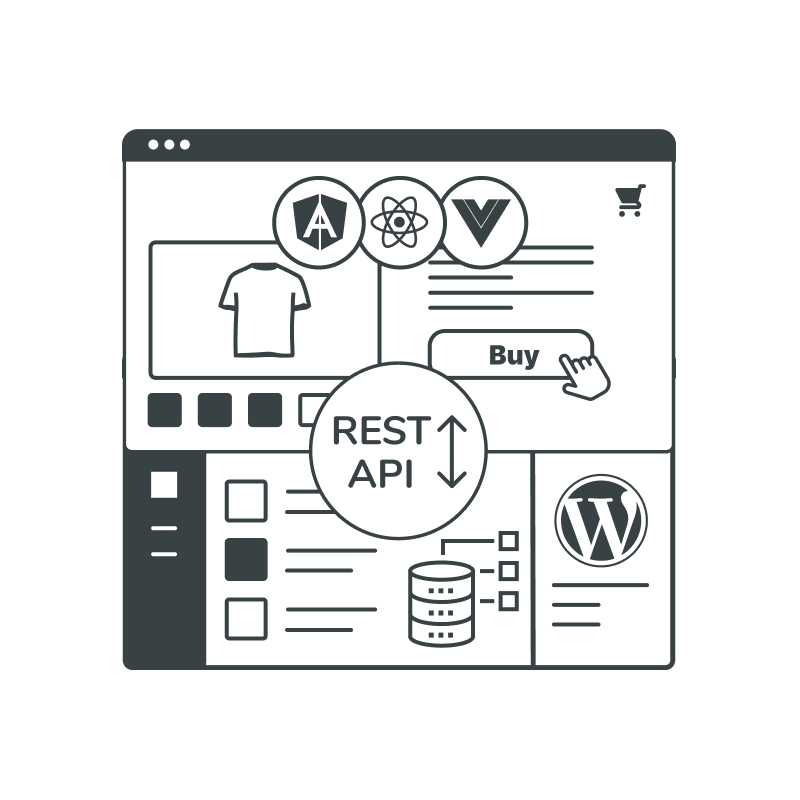
A flexible front-end layer decoupled from back-end commerce logic, so teams can move faster, launch more easily, and support every channel through their existing stack.
Scope Your Headless Project

Challenges we solve with headless commerce services

When your storefront, theme, or release model blocks custom experiences, our headless commerce development services close integration and ownership gaps.
01
Front-end work waits on back-end releases
A decoupled storefront lets front-end changes ship independently while the commerce platform keeps core commerce logic
02
Theme limitations shape the UX
A custom front-end removes theme constraints around components, states, rendering, and interaction patterns
03
Integration failures reach the customer
Defined API contracts and validated data flows keep pricing, inventory, shipping, tax, and order data consistent
04
Multi-market delivery creates duplicate work
Shared components and common data contracts reduce repeated front-end logic across regions, brands, and languages
05
Release risk sits between systems
Cross-system QA covers the storefront, APIs, data flows, and transaction paths where failures are most likely to surface
06
Nobody clearly owns the headless stack
Documented ownership clarifies responsibility for the front-end, APIs, content model, monitoring, releases, and support
Scale your commerce channels with headless solutions built to perform
Order now

Our headless commerce development services for practical needs

From headless storefront to B2B commerce portal, to an embedded search experience layer, we turn operational bottlenecks into long-term business wins.

Architecture fit & scope

A review of the existing commerce setup defines if headless fits, what stays in place, and where the new storefront begins and ends.
  • Current-state storefront, back-end, integration review
  • Headless-versus-native fit assessment
  • Front-end/back-end ownership boundaries
  • Dependency & source-of-truth mapping
  • Data rendering/caching approach
  • Scope & acceptance criteria

Custom headless storefront development

Responsive, component-based storefronts built around approved designs, commerce requirements, and the agreed front-end stack
  • React,Vue.js, Angular, other modern front-end technologies
  • Reusable storefront components/states
  • Responsive behavior across agreed breakpoints
  • Accessibility-aware implementation
  • Page speed & load-optimized web app
  • Maintainable code & documented handoff

Commerce back-end & API integration

Connecting storefront behavior to the commerce back-end and supporting systems through the APIs and data flows available in the chosen stack
  • Catalog, pricing, cart, checkout, customer, order flows
  • Payment, shipping, tax, inventory, product-data integrations
  • ERP, OMS, CRM, PIM, analytics connections
  • REST and GraphQL implementation
  • Webhooks, sync logic, error handling, fallback states
  • API contract/data-flow validation

Migration & storefront modernization

Live-store migrations are planned around data integrity, search continuity, release control, and a verifiable path to production
  • Phased front-end & back-end separation
  • URL, redirect, canonical, metadata mapping
  • Data & content migration planning
  • Pre- and post-migration data reconciliation
  • Analytics/tracking continuity checks
  • Staging, launch, rollback planning

Product discovery & transaction flows

Customer-facing commerce flows, implemented around the approved experience, platform behavior, and underlying business rules
  • Search, filters, product-detail experiences
  • Cart/checkout front-end engineering
  • Account & order-status experiences
  • Recommendation or personalization blocks
  • Empty, loading, error, failure states

Performance, QA, launch & ongoing support

The storefront is tested as one connected commerce system, with coverage tied to agreed risks and acceptance criteria
  • Performance baselining, implementation-level tuning
  • Functional testing of critical commerce journeys
  • API & integration validation
  • Cross-browser, cross-device, accessibility checks
  • Analytics, tracking, regression, launch-readiness testing
  • Deployment support, monitoring, and post-launch fixes

GetDevDone - your headless commerce development company

01
Architecture fit before build
We define whether headless is the right move, should be phased in, or should stay native, based on actual storefront, integration, and delivery constraints
02
One accountable delivery team
One team owns the storefront, integrations, QA, and launch coordination, so issues do not get bounced between front-end and back-end vendors
03
Quality and ownership beyond launch
Experienced engineers, structured testing, documented handoff, and scoped ongoing support keep the headless stack maintainable and clearly owned after go-live
Launch client or in-house commerce experiences on the platform that fits
Order now

Headless commerce decisions to make early

Our headless eCommerce development services align your front-end, commerce APIs, system boundaries, AI tools, and daily workflows into one tight ecosystem.
Headless or native storefront
Choose headless for custom experiences, multiple touchpoints, or complex integrations; keep the native storefront when it meets requirements with less engineering overhead
Platform-backed headless
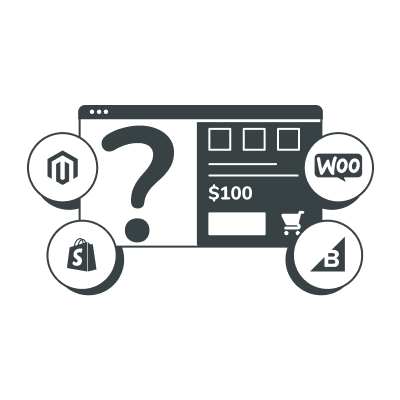
Define key capabilities in Shopify, BigCommerce, Adobe Commerce, or WooCommerce, and verify API coverage, checkout behavior, app compatibility, and integration risks upfront
Multi-market & multi-brand delivery
Decide if markets and brands will share one storefront foundation or use separate applications, based on variances in catalogs, content, pricing, languages, currencies, and business rules
B2B, B2C, or hybrid commerce
Account hierarchies, pricing, purchasing permissions, approvals, tax rules, and order workflows should shape the data model, integrations, checkout, and acceptance criteria from the start
Composable & MACH patterns
Add independently replaceable services only when the business requires distinct ownership, scaling, compliance, or replacement boundaries
Ownership after launch
Assign clear ownership for the storefront, platform, APIs, integrations, security, deployments, and incident response to manage every critical part of the architecture

How a headless commerce project moves across the SDLC

A new storefront, a phased migration, and a rescue project move through the consistent delivery stages of headless commerce website development.
We document the current platform, storefront limitations, business model, markets, content workflow, integrations, release pain, and ownership expectations
Front-end and back-end responsibilities, APIs, source-of-truth systems, data contracts, error handling, and external dependencies are mapped before implementation starts
The architecture becomes a buildable plan: components, flows, integrations, milestones, QA coverage, assumptions, and sign-off points.
API-first contract design with strict data schemas allows for parallel front-end UX/UI development and back-end systems integration
The front-end is built in staging and connected to the approved commerce, content, payment, shipping, tax, inventory, business-system, and analytics
We test devices and browsers, speed and performance, critical storefront states, APIs, cart, checkout, payments, orders, analytics, accessibility, and failure behavior before production
Redirects, tracking, integrations, cache behavior, release steps, and rollback readiness are checked around go-live
Documentation, repository access, technical notes, and ownership are transferred. Ongoing monitoring, fixes, and releases can stay with GetDevDone under an agreed support model

Headless delivery models that fit your processes

The commercial model follows what is known, what is still uncertain, and how much of the system your team controls.
Fixed-price project
Best for a clearly defined storefront build or approved-design implementation with stable APIs, agreed integrations, and acceptance criteria that can be locked before development
Time & materials
Better for migrations, inherited headless code, performance work, integration-heavy projects, or modernization where technical unknowns will surface during execution
Hybrid delivery
Useful when the storefront scope is stable but integration or data work still depends on access, documentation quality, third-party systems, or data condition
Ongoing support
For monitoring, bug fixes, platform changes, integration maintenance, performance work, and controlled releases after launch, the model keeps your headless architecture stable and secure
White-label delivery team
For digital, marketing, performance, and eCommerce businesses that want reliable engineering behind the scenes, we work inside the agreed tools, communication rules, repositories, review points, and handoff processes.

Our work in client stories

How we turn complexity into real-world solutions for our clients.
blog article preview
Global solid-surface manufacturer
Ten markets, one shared headless eCommerce platform
A global manufacturer launched a multisite with 10 regional storefronts on one codebase, with localized content, catalogs, and centralized governance
blog article preview
German electronics retailer
Marketplace growth with headless commerce
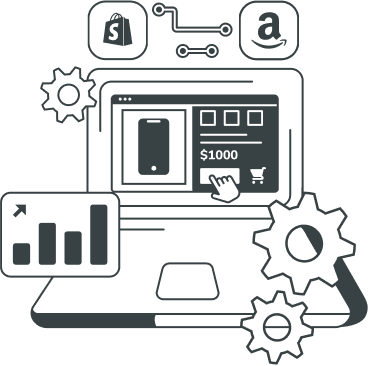
By connecting Shopify Plus, Amazon, ERP, inventory, forecasting, and repricing systems, a retailer cut cancellations from 12% to 2% and saved 20 staff hours weekly

Our insights

Practical analysis, direct thinking, clearly explained.
blog article preview
Comparison
March 25th, 2026
Best headless CMS for eCommerce: Comparison of architecture, real pricing & implementation steps for agencies in 2026
blog article preview
Comparison
May 22nd, 2026
5 Best Headless WordPress eCommerce Platforms
blog article preview
Best practices
May 21st, 2026
eCommerce development checklist: 10 steps that drive revenue and growth
blog article preview
Comparison
May 3rd, 2026
WooCommerce, BigCommerce, Shopify, Adobe Commerce (Magento): Which Platform to Choose for Your Online Store
04/06

Tell us
where you
need help

Ready to go headless?
Let’s give every eCommerce project room to grow.

Let’s discuss your project

Drop files here to upload or
    By submitting your request, you agree to our Terms & Conditions, accept our Privacy Policy, and consent to the processing of your personal data.

    Headless commerce development
    services FAQs

    A headless commerce development company makes sense when custom experiences, independent front-end releases, multiple channels or markets, or complex integrations justify the added architecture and maintenance. For simpler stores, the native storefront may remain the better fit.
    Headless commerce development services can cover architecture fit assessment, front-end implementation, API and system integration, phased migration, performance work, transactional QA, deployment, handoff, monitoring, and ongoing support within the agreed scope.
    Yes. When the current platform exposes suitable APIs, it can continue handling catalog, pricing, cart, checkout, customer, and order logic while the custom storefront runs separately. API coverage, data quality, and existing integrations get checked first.
    GetDevDone works with Shopify and Shopify Plus, BigCommerce, Adobe Commerce/Magento, WooCommerce, and Webflow Commerce alongside Storyblok, Sanity, Strapi, Medusa, Payload, where the project supports it. The right back-end depends on API coverage, business model, catalog complexity, checkout requirements, integrations, and long-term ownership.
    There is no useful one-size-fits-all price. Cost depends on storefront templates and components, front-end framework, API coverage, content architecture, catalog and data complexity, checkout, integrations, migration scope, markets, QA, deployment, and post-launch support. Headless commerce website development services are estimated against those real dependencies.
    Timeline depends on scope clarity, design and content readiness, API documentation, integration access, data cleanup, migration requirements, approvals, QA depth, and launch constraints. Headless eCommerce development services are easier to schedule once those dependencies are visible.
    Common risks include unclear ownership, incomplete API coverage, fragile data contracts, duplicated business logic, checkout regressions, stale caches, tracking gaps, missing failure states, weak staging, and insufficient monitoring or rollback planning. Well-scoped headless eCommerce services account for these risks before launch.
    No. Headless eСommerce development services give teams more control over front-end implementation, but results still depend on rendering, code quality, images, caching, API performance, third-party scripts, content, and QA. Headless itself does not guarantee better business or technical outcomes.
    Ownership should be agreed before development starts. The long-term model needs named owners for the storefront, commerce back-end, integrations, content, monitoring, security updates, and deployment. GetDevDone can provide documented handoff and optional support as part of headless commerce services.
    Headless commerce website development separates the presentation layer from the commerce back-end, giving teams more control over front-end delivery while adding responsibility for APIs, integrations, deployment, monitoring, and ongoing ownership.