Signs Your Agency Needs a White-Label WordPress Development Partner
When white-label WordPress development services safeguard and support the agency growth and magrins
- 10 min read

TL;DR
A reliable white-label partner should solve the delivery gap your team has, whether it is capacity, technical depth, or broader production support.
The best white-label web development companies give agencies and digital teams reliable development capacity without requiring them to hire in-house or hand client relationships to an outside vendor. The right partner depends on whether you need broad web development, WordPress and WooCommerce expertise, software-style engineering, design-to-code support, marketing fulfillment, or delivery across multiple platforms.
Our top picks are GetDevDone, White Label Coders, Rubico, Xovak Studio, Webytude, ColorWhistle, and ViralChilly. GetDevDone is the strongest fit for broad white-label development across CMS, front-end, back-end, eCommerce, QA, and ongoing implementation, while other providers may be a better match for more specialized needs.
The companies on this list work well for different agency setups. The choice comes down to how much you want to outsource, how closely the team needs to follow your workflow, and how technically demanding the work is.
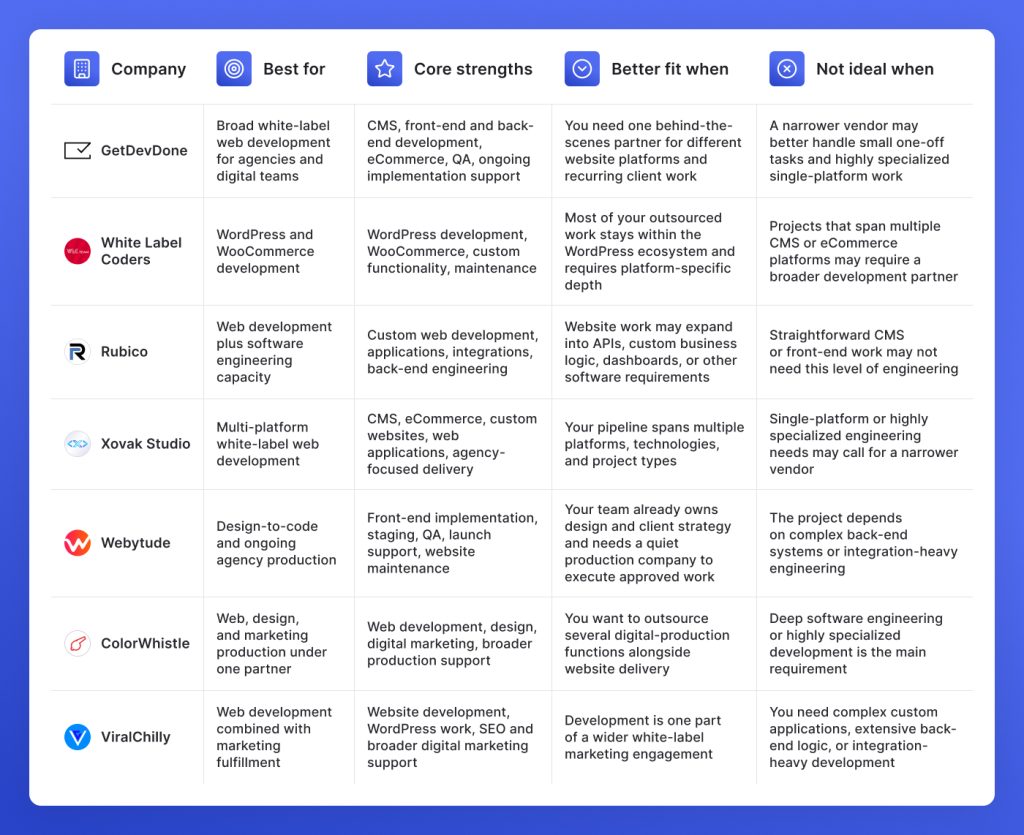
At GetDevDone, we looked for companies with a visible white-label or agency-partner model and clear evidence that they deliver web development work. We reviewed company websites, service pages, case studies, portfolios, Clutch profiles, and client reviews to understand whether each provider was a credible fit for agencies, marketing teams, or businesses that need development delivered behind the scenes.
Companies focused mainly on design, SEO, or consulting without a visible development offering were excluded. GetDevDone was evaluated using the same criteria as every other company on the list.
Start with platform fit, since the scope behind “web development” varies significantly across vendors. If most of your pipeline is WordPress or WooCommerce, a specialist may be more useful than a broad engineering vendor. Agencies working across Shopify, Webflow, custom CMS platforms, headless builds, and web apps need a partner with proven multi-platform delivery. Strong back-end expertise also matters when projects involve integrations, APIs, or custom functionality beyond standard CMS work.
Next, decide how you want to buy capacity. A fixed-scope model works for clearly defined builds. Overflow production is better suited to projects with fluctuating volume, while ongoing support suits agencies with a steady stream of updates and maintenance work. Dedicated developers make more sense when the workload is continuous, and your team can provide regular technical direction.
Client visibility is another practical filter. Some agencies need the vendor to remain completely invisible and work through their PM tools, email accounts, and approval process. Others are comfortable with co-branded delivery or direct technical communication. Define this upfront, along with NDA requirements and who owns client communication, project decisions, accounts, code, and final handoff.
Do not judge technical depth from a service list alone. Check whether the team handles only front-end implementation or can also own CMS work, back-end development, API integrations, QA, deployment, and DevOps where required. Then look for evidence that matches your actual scope: relevant service pages, comparable case studies, portfolio examples, Clutch reviews, and experience in similar industries or platforms.
Before signing, dig into the areas where projects tend to go wrong. Make sure the vendor can explain how they deal with changes, problems, and post-launch support.
Unclear ownership, weak QA, no NDA, vague revision rules, and no defined post-launch process are stronger warning signs than a slightly higher project quote.
Finally, consider the buyer model. Agencies reselling development need a tech partner that can operate reliably behind their brand without disrupting the client relationship. An in-house marketing or digital team may care less about strict white-labeling and more about quiet external execution, technical ownership, and the ability to work within existing internal processes.
A long vendor list is only useful if you can quickly see what each company brings to the table. Below, we break down the providers by their strongest capabilities, relevant services, and the agency scenarios where they make the most sense.
Best for:
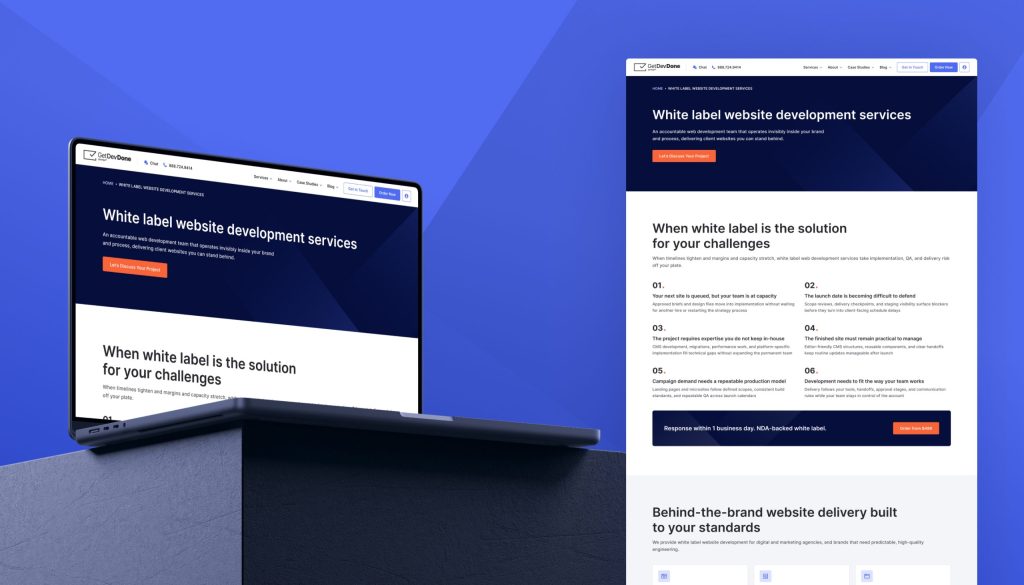
Agencies and teams that need broad white-label development capacity across website builds, CMS platforms, front-end and back-end work, eCommerce, QA, migrations, and ongoing support.
Why it is included:
GetDevDone is built for teams that need to hand off more than one narrow type of web project. Its website development offering spans custom websites, landing pages, CMS implementation, migrations, performance work, and maintenance, with support for WordPress, Drupal, Craft CMS, HubSpot CMS, Webflow, and headless architectures. The team can also work as an extension of an agency’s existing delivery setup rather than taking over the client relationship.
Relevant services:
Evidence:
GetDevDone’s website development services cover custom websites, CMS development and migrations, front-end and back-end implementation, eCommerce, QA, performance optimization, and ongoing maintenance. Its CMS scope includes WordPress, Drupal, Craft CMS, HubSpot CMS, Webflow, and headless architectures.
GetDevDone turned an AI-generated prototype into a production-ready WordPress site
The team rebuilt a 12-page Lovable prototype in WordPress Gutenberg in three weeks, adding CMS control, working forms, better SEO, and cutting mobile LCP from 4.2 to under 2 seconds.
Strengths:
Limitations:
The breadth of the offer may be unnecessary for buyers that only need a very small one-off development task or want a vendor specializing exclusively in a single platform.
Best for:
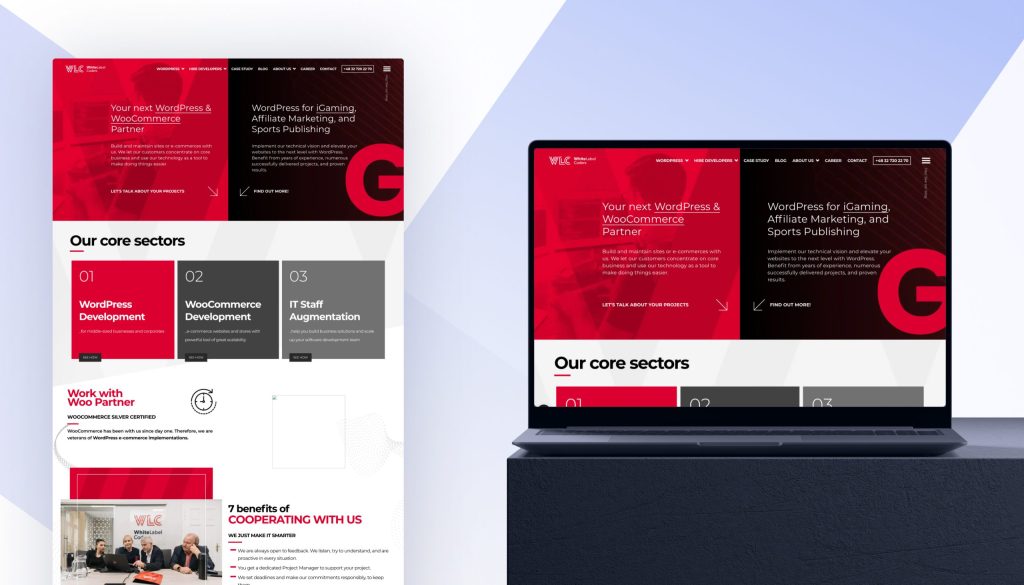
Agencies and businesses that need specialized WordPress and WooCommerce development support, from custom builds and migrations to maintenance and additional development capacity.
Why it is included:
White Label Coders concentrates its development offering around WordPress and WooCommerce, with additional support for custom functionality, migrations, technical audits, maintenance, and staff augmentation. This makes it a strong fit for buyers whose outsourced development pipeline is already centered on the WordPress ecosystem.
Relevant services:
Evidence:
Clutch lists WordPress as 100% of the company’s CMS focus and WooCommerce as 100% of its eCommerce platform focus, with verified projects covering WordPress development, customization, maintenance, and additional development capacity. Its Selena case study covers a corporate WordPress website with 50+ distinct page views and functionalities, built from Figma with editable Gutenberg blocks and custom back-end search.
Strengths:
Limitations:
Less relevant for buyers that need broad CMS or eCommerce coverage outside the WordPress and WooCommerce ecosystem.
Best for:
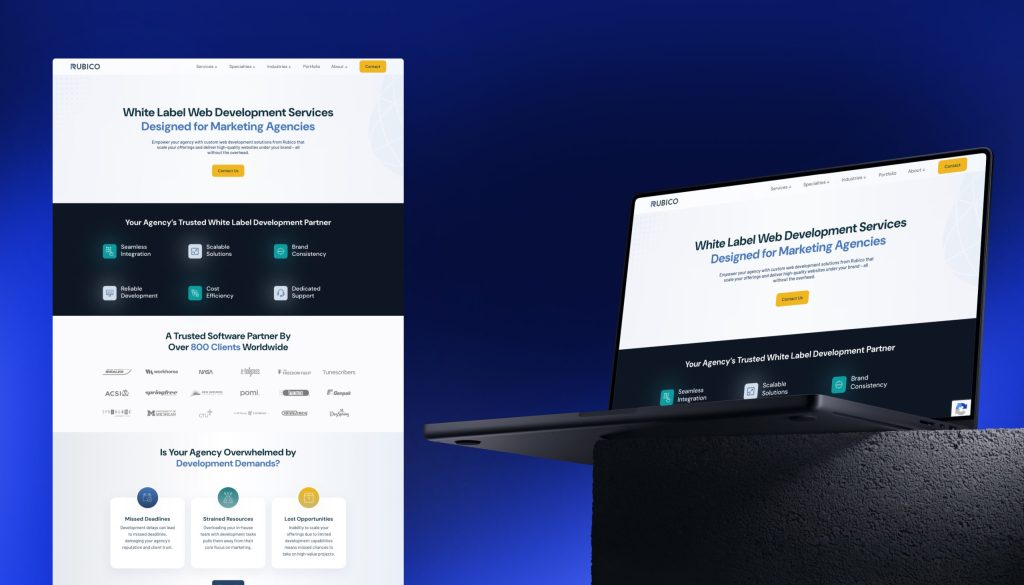
Agencies and digital teams that need white-label website delivery plus broader software engineering capacity for custom web apps, integrations, and back-end-heavy projects.
Why it is included:
Rubico’s agency offering extends beyond standard website production into web applications, custom software, mobile development, testing, and staff augmentation. Its web development stack includes React and Angular on the front end, Node.js and PHP on the back end, and Shopify for eCommerce, making it relevant when an agency needs one technical partner for both websites and more complex engineering work.
Relevant services:
Evidence:
Rubico’s Clutch profile shows custom software development as its largest service line, followed by mobile app development, web development, application testing, and eCommerce development. Its New Horizons Foundation case study demonstrates that broader engineering scope in practice: Rubico replaced an outdated Joomla system with a custom web platform combining WordPress, Laravel, Angular, database and API integrations, donor and administrative portals, automated workflows, QA, and ongoing maintenance.
Strengths:
Limitations:
Rubico may be more engineering-heavy than necessary for agencies that mainly need straightforward brochure websites or simple CMS implementation without custom application logic.
Best for:
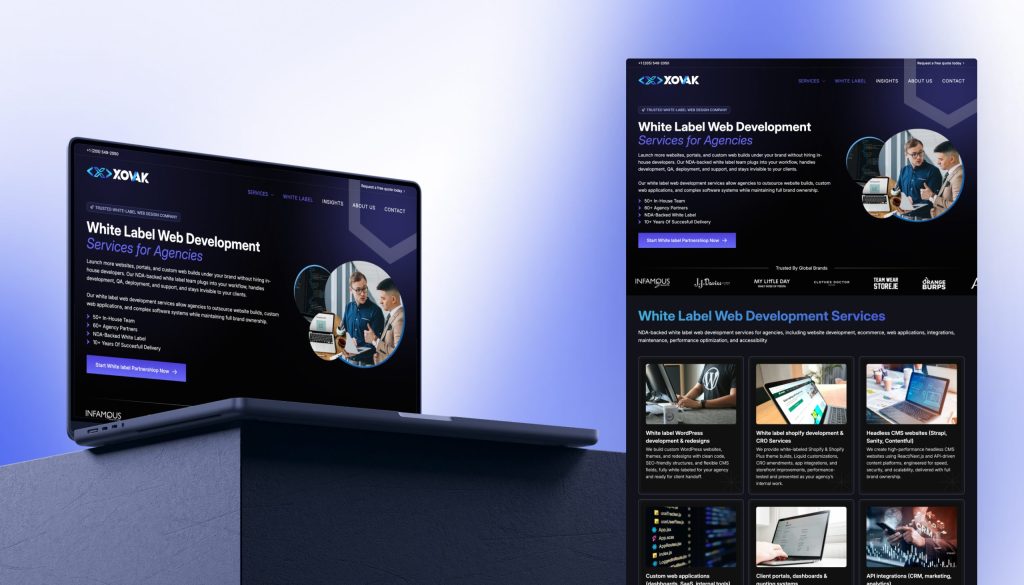
Agencies that need white-label website development across CMS, eCommerce, headless builds, and custom web applications.
Why it is included:
Xovak Studio has an explicit white-label model built around agency delivery. Its scope covers WordPress, Shopify and Shopify Plus, Webflow, headless CMS platforms, custom web applications, portals, dashboards, and integrations, making it relevant when an agency needs support across several types of web projects rather than one CMS alone.
Relevant services:
Evidence:
Xovak’s white-label offering covers website builds, eCommerce, headless CMS, custom applications, API integrations, WooCommerce, performance optimization, accessibility, and ongoing maintenance. The company also explicitly supports NDA-backed delivery with no direct client contact, agency-branded documentation, full code ownership, QA reports, and both project-based and ongoing engagements.
Strengths:
Limitations:
The public service offering is broad, but there is less third-party and case-study evidence in the provided sources showing the depth of delivery across each platform.
Best for:
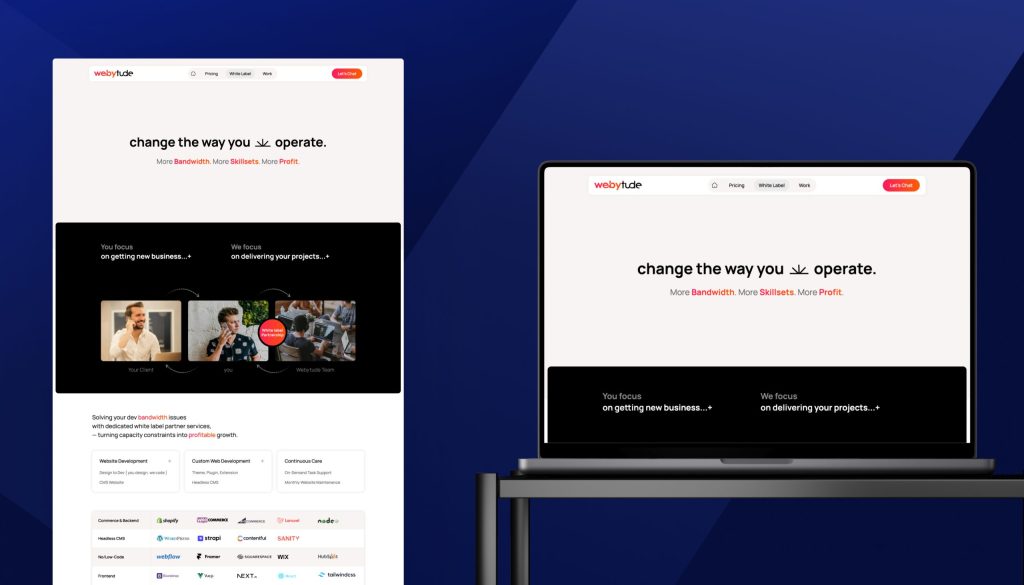
Smaller agencies that already handle design and client strategy in-house and need a white-label team for design-to-code work, website builds, maintenance, and overflow development.
Why it is included:
Webytude is set up specifically for behind-the-scenes agency production. Its white-label service covers design-to-development, CMS and eCommerce websites, landing pages, no-code builds, and ongoing maintenance, with the option to work through the agency’s existing project management tools and remain invisible to the end client.
Relevant services:
Evidence:
Webytude reports a 10-person white-label team covering front-end and back-end development, WordPress, Shopify, BigCommerce, QA, and server administration, with every task passing QA before delivery. Its Clutch profile lists web development and eCommerce development as its two largest development service lines, while verified reviews cover custom WooCommerce work, WordPress builds, optimization, and ongoing website maintenance.
Strengths:
Limitations:
Companies considering complex back-end systems, integration-heavy builds, or enterprise-scale work should verify comparable project experience first.
Best for:
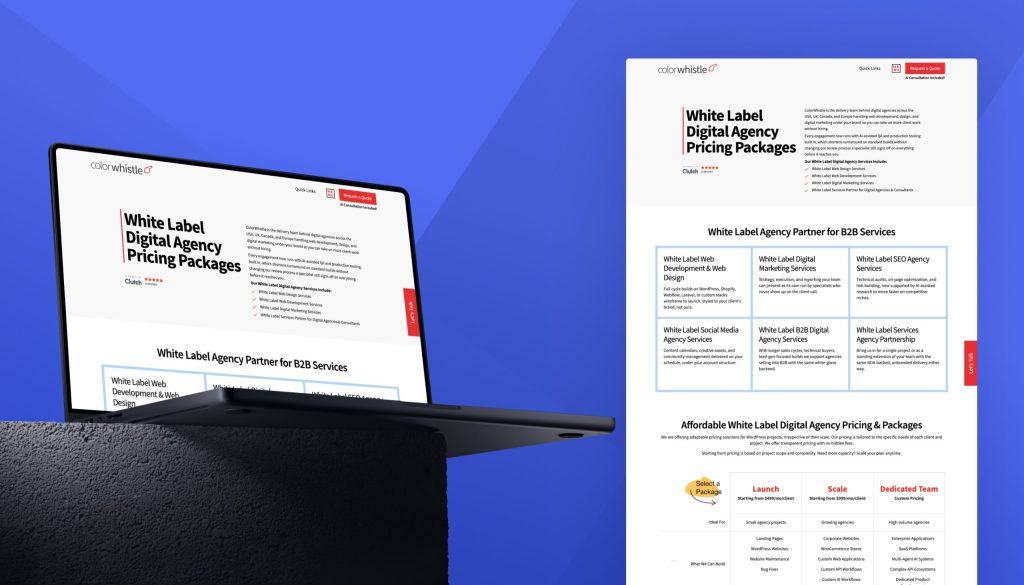
Agencies and businesses that want white-label website development together with design and digital marketing production.
Why it is included:
ColorWhistle combines web development with design, SEO, content, paid media, social media, and other marketing services under one white-label model. That makes it particularly relevant when website delivery is only one part of the work an agency wants to outsource under its own brand.
Relevant services:
Evidence:
Clutch lists web development, digital strategy, and UX/UI design as ColorWhistle’s three main service lines, reflecting its broader production model. Its Spencer Realty project provides a concrete development example: the team built a 20+ page WordPress real estate website and created custom property-listing pages using the IDX Broker API.
Strengths:
Limitations:
As ColorWhistle spreads its offering across development, design, and digital marketing, it may be less suitable for buyers whose main requirement is deep software engineering or highly specialized application development.
Best for:
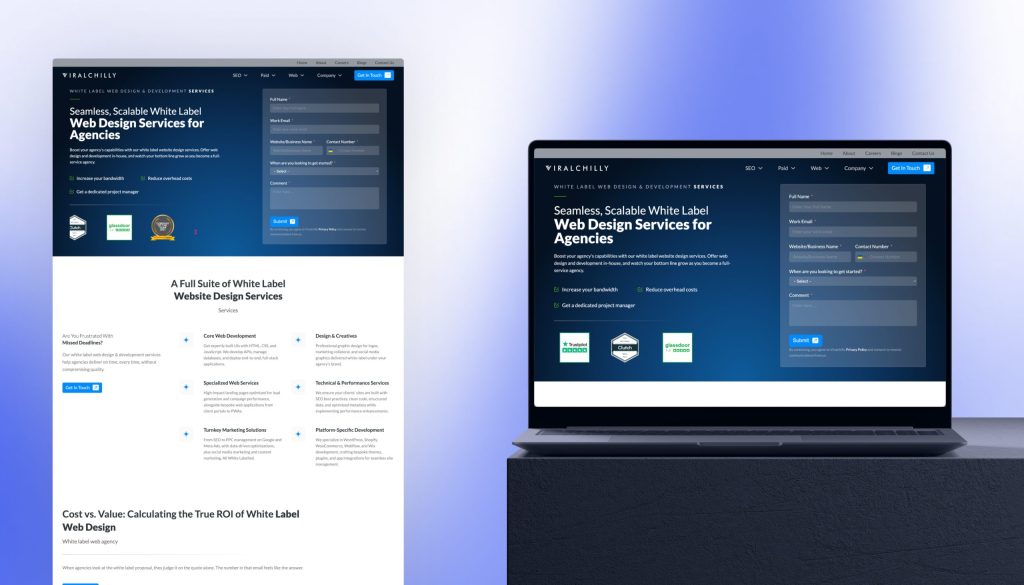
Digital teams that want to outsource website development together with SEO, paid media, content, or other digital marketing work under a white-label model.
Why it is included:
ViralChilly combines white-label web development with a substantial marketing fulfillment offering. Its development scope includes WordPress, Shopify, WooCommerce, Webflow, Wix, landing pages, custom web applications, APIs, and databases, while the same partner can also handle SEO, PPC, content marketing, and social media work. This makes it useful when website delivery sits inside a broader client account rather than being sold as a standalone technical project.
Relevant services:
Evidence:
Clutch lists SEO as 60% of ViralChilly’s service mix, web development as 30%, and content marketing as 10%. Its verified work includes a marketing-agency engagement combining web development, SEO, and content marketing, which directly supports its fit for agencies outsourcing both website production and marketing execution.
Strengths:
Limitations:
ViralChilly presents custom applications, APIs, and database development as part of its offering, but the public evidence provided is stronger for website and marketing engagements than for complex software engineering.
Your project needs should lead the decision. Match it to the right vendor type, then check the capabilities that matter before you hire.
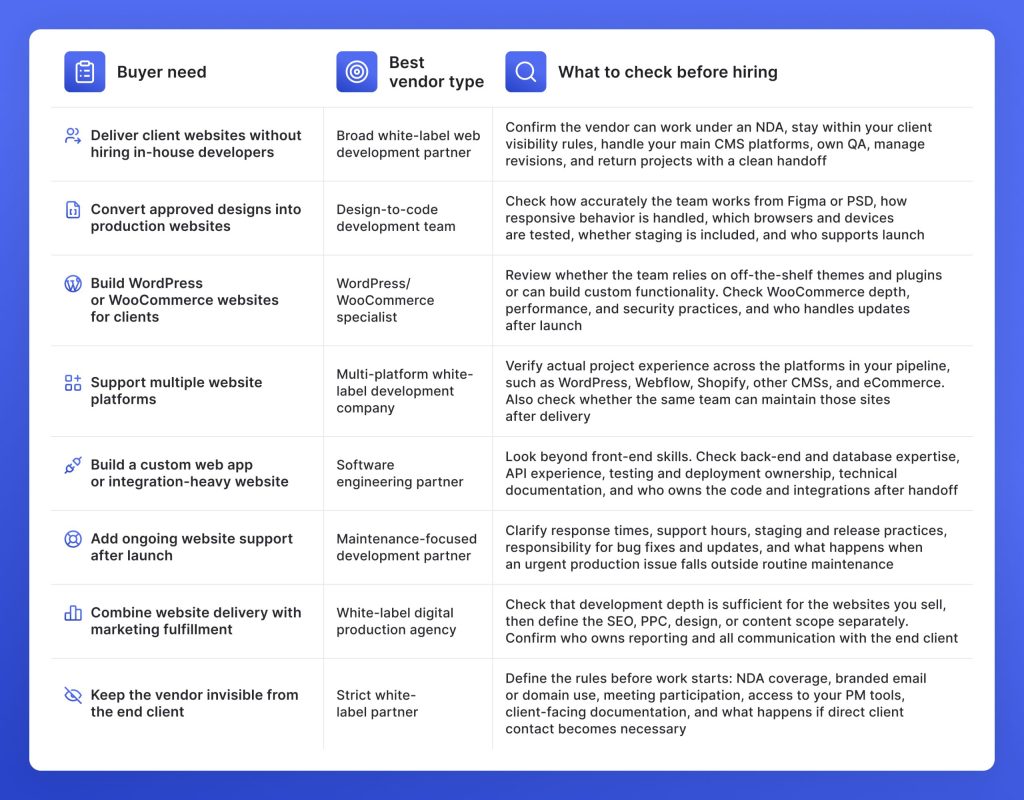
This is not an independent research report, analyst ranking, sponsored placement, or paid directory listing. The companies included in this article were identified and evaluated using publicly available information available at the time of publication, including company websites, service pages, case studies, portfolios, and verifiable third-party review platforms, combined with AI-assisted research and human editorial review conducted by the GetDevDone team. The selection and ordering of companies reflect our editorial judgment regarding their visible relevance to white-label website projects and capabilities based on the criteria discussed in this article. Different agencies, project requirements, budgets, and operating models may reasonably lead to different conclusions. We have made a good-faith effort to evaluate companies based on verifiable public information rather than marketing claims alone. However, this list is not exhaustive, definitive, or free from an editorial perspective.
A white-label web development company builds websites or web functionality behind the scenes while the agency or hiring team keeps ownership of the client relationship and delivery. The model works best when you need external development capacity without giving up control over branding, communication, approvals, and handoff.
Choose a partner that matches your core platforms, technical scope, delivery model, and level of client visibility. Then check QA, communication, relevant case studies or reviews, white-label rules, and post-launch support before comparing price.
A white-label partner makes sense when development demand fluctuates or client projects require skills you do not need on permanent payroll. In-house hiring provides more control, freelancers can suit isolated tasks, and white-label teams are usually a better fit when you need repeatable capacity, QA, continuity, and lower management overhead across multiple projects.
Yes. Businesses can use white-label development when they want an external team to work quietly within their internal processes while they retain ownership of the website, stakeholders, and delivery decisions. Agencies are simply the more natural fit because keeping the vendor invisible from the end client is often part of the requirement.
Check NDA terms, client visibility rules, project management, QA ownership, technical stack, code ownership, maintenance, references, reviews, and escalation procedures. These details should be clear before work starts, especially who communicates with the client, who fixes defects, and who remains responsible after launch.
A freelancer is often more flexible and cost-effective for a small, clearly defined task, while a white-label company provides broader capacity, structured QA, project management, and continuity across projects. The trade-off is higher delivery overhead in exchange for less dependence on one person and easier access to multiple technical skills.
The main risks are weak QA, unclear scope, slow communication, hidden subcontracting, poor documentation, missed deadlines, plugin or theme dependency, and unclear post-launch ownership. Most become expensive when responsibilities are not defined upfront, particularly around revisions, bug fixes, technical decisions, and maintenance.
A white-label partner is usually better for project-based agency delivery and workloads that change from month to month. A dedicated team is often a better fit for long-term product development or continuous engineering where the same developers need to build deep knowledge of the product and architecture.
White-label web development costs depend on the platform, number of templates, custom functionality, integrations, QA requirements, timeline, and post-launch support. Fixed-scope pricing usually fits well-defined builds, while retainers or dedicated-resource models make more sense when development demand is ongoing or difficult to predict.
White Label Coders is a strong fit when WordPress and WooCommerce make up most of the development pipeline, while GetDevDone suits buyers that need WordPress or WooCommerce work alongside broader front-end, back-end, QA, and ongoing development support. The better choice depends on whether you need concentrated platform specialization or wider development capacity across different project types.
When white-label WordPress development services safeguard and support the agency growth and magrins
How to capture agency’s margins and client retention with a marketing technology partner. Real numbers and tips on how to scale delivery and stay relevant and safe.
Learn 8 essential tips for choosing the best IT company, from evaluating expertise and communication to ensuring reliable project delivery.
The delivery gap and tax. Practical steps for agencies lto keep margins and minimizae operational friction
WordPress migration ROI: when legacy CMS costs more than migration, the tipping points behind faster delivery, scalable SEO, cleaner integrations.
Wrong plugin choice on a business-critical WordPress integration costs agencies $15K–$40K in rework. Here's how to scope CRM, payments, and custom API integrations before build starts.