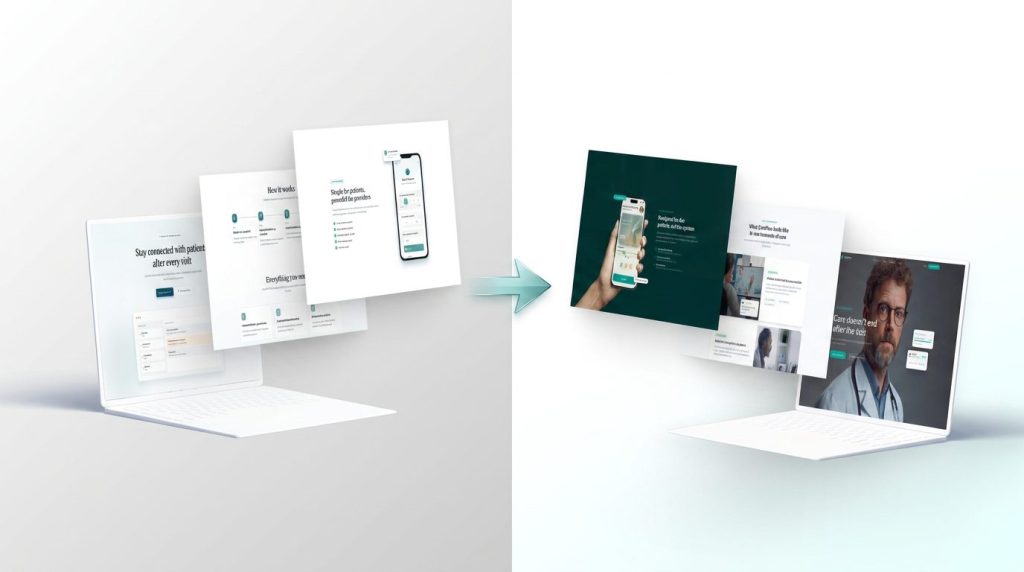
A product startup moved from AI-generated concepts to a launchable website with a scalable CMS, SEO-ready architecture, and a clear design-to-development path. The result was a digital foundation built without rework cycles, design drift, or prototype-to-production disconnect.
Our client is a digital product startup building a smart all-in-one remote platform that unites design tools, marketing workflows, and team feedback to enable real-time co-creation, asset reviews, and performance tracking for faster launches and ROI.
Business challenge
The client’s business had forward momentum, but lacked a solid, launch-ready website foundation. Their early AI-generated concepts with tools like Lovable and v0 helped the team explore directions quickly, but they did not provide the structure needed to move into production. What looked complete at a glance was still missing the essentials that make a website usable as a business asset: clear UX flow, consistent design logic, reusable components, and a technical setup that could support launch and scale.
A client-side prototype approach limited search visibility from the start, while the absence of a CMS meant routine content updates would remain tied to developers indefinitely.
They needed an expert partner to turn early ideas into a buildable, brand-ready solution — one that could move into development without rework.
Solution delivered
The project moved from AI-assisted exploration into a structured design-and-build process, resulting in a Figma design system and a production Next.js website, connected to Sanity CMS.
GetDevDone designed the final solution, solving two practical needs from the start. The site had to be search-visible, which ruled out a client-side prototype approach. And the client needed a CMS that matched how their team actually works without any new dependencies on developers for routine updates.
AI prototype unstable for launch?
Let’s turn the experiment into a client-ready site.
AI-accelerated ideation, guided by human review. Using Google Stitch and Figma Make, the team generated 10 layout directions across core pages within the first two days (different content hierarchies, navigation approaches, visual treatments) and narrowed them to two. A second round of variations within those two routes tested further combinations of navigation patterns and section layouts before a direction was locked. Decisions were grounded in UX logic, on top of aesthetics.
Design system, ready for implementation. Once a direction was selected, it was translated into a full Figma design system: typography, color, spacing, component library (navigation, cards, forms, sections), and responsive behavior across devices. Interaction patterns were defined as well, so the design could move into development without ambiguity.
CMS architecture built around real content workflows. The content model in Sanity was structured for the client’s team to manage the site directly through a structured editing interface. Our AI engineers created editable content types for pages, blog posts, team members, and products with real-time previews, so changes can be reviewed before publishing.
Front-end implementation for performance and visibility. GetDevDone’s experts built the front-end component by component against the Figma system, keeping visual consistency throughout. Next.js was selected for server-side rendering, ensuring the site was indexable from launch. Static generation handled content-heavy pages.
Launch readiness and production setup. The team implemented GA4 tracking, structured metadata, Open Graph tags, sitemap configuration, an accessibility baseline (alt text, keyboard navigation, color contrast, ARIA), and a Vercel staging environment for controlled release.
Technologies & tools
Figma, Google Stitch, Figma Make: design & ideation
Next.js (React): front-end
Sanity: CMS
Vercel: infrastructure & deployment
GA4, structured metadata: analytics & SEO
Business outcomes
The client moved through one structured process from concept to fully functional production website without spending additional time or budget on disconnected prototype exploration or redesign loops.
Speed to market The client launched a production website five weeks after kickoff, covering design from scratch, Next.js development, Sanity CMS setup, and launch preparation within a single delivery cycle.
Search readiness By replacing the earlier client-side prototype approach with a Next.js site built for server-side rendering, the business launched with a website that search engines could index from day one.
Content operations Sanity CMS gave the client’s team direct control over pages, blog posts, team profiles, and product information through a structured editing interface, with real-time preview supporting faster and safer content updates.
Scalability The Figma design system and component library created a reusable foundation for future pages and features, making it easier to extend the site without reworking the design approach.
A scalable hub for portfolio-wide analytics helps clients structure marketing information for reporting. It connects Adverity, BigQuery, and Looker Studio using reusable templates to standardize inputs across sources. This supports churn and propensity modeling across their portfolio and creates consistent dashboards. A client reduces manual preparation time and can track churn and risk across all accounts.
GetDevDone built an AI-powered knowledge assistant that turns the agency's internal document library into a searchable source of truth for the account team.
Lovable AI prototype became a production WordPress site with editable Gutenberg blocks, real forms, and SEO, delivered in 3 weeks for a digital agency.
AI-generated code broke a Stripe and Memberstack integration in the payment system. See how GetDevDone diagnosed, reconciled, and fully restored the system.
Talk to a commerce advisor to define the right architecture, platforms, and growth model for your business.
Get guidance on configuration, scalability, and compliance — tailored to your market and goals.