The best website redesign agencies and development companies in 2026 focus on whether your project needs technical implementation, brand strategy, specialized platforms, or full-service delivery.
GetDevDone: Best for technical execution, CMS implementation, migration, and ongoing development when strategy is already set
O8 Agency & Bop Design: Best for B2B positioning, content, SEO, and lead generation
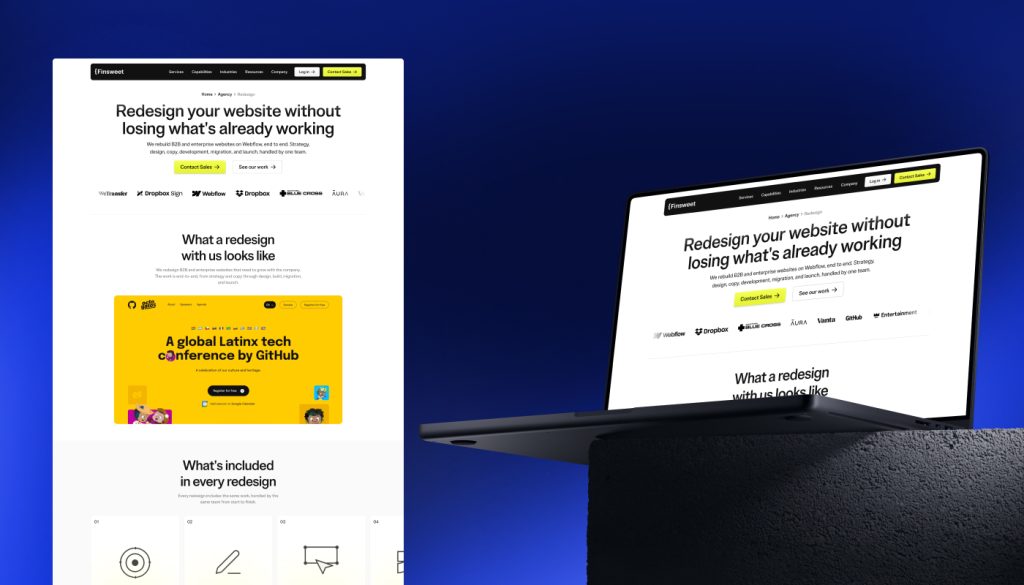
Finsweet: Best for Webflow-native builds and specialized ecosystems.
Phenomenon Studio & Blacksmith Agency: Best for high-touch UX, brand experience, and conversion design
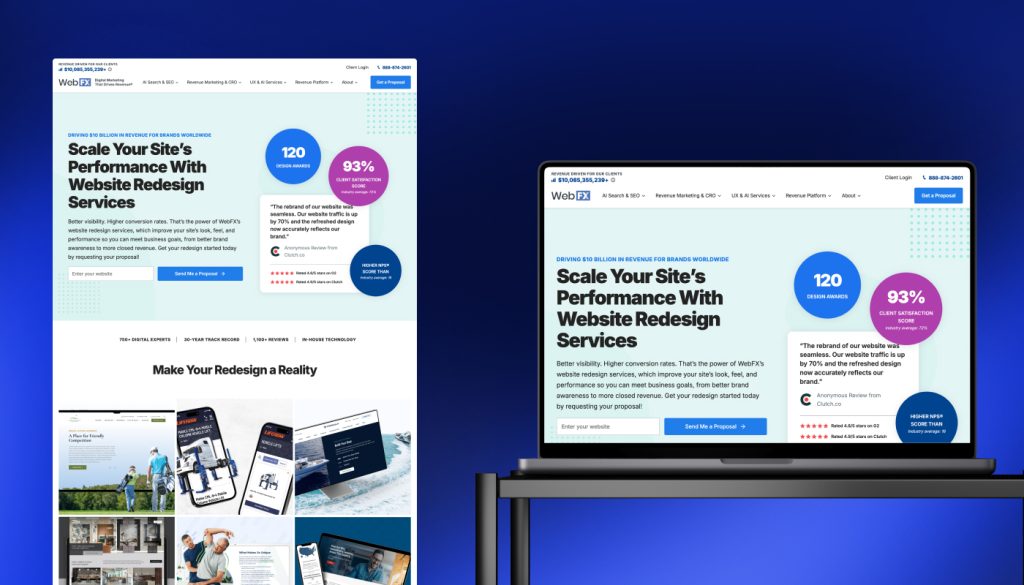
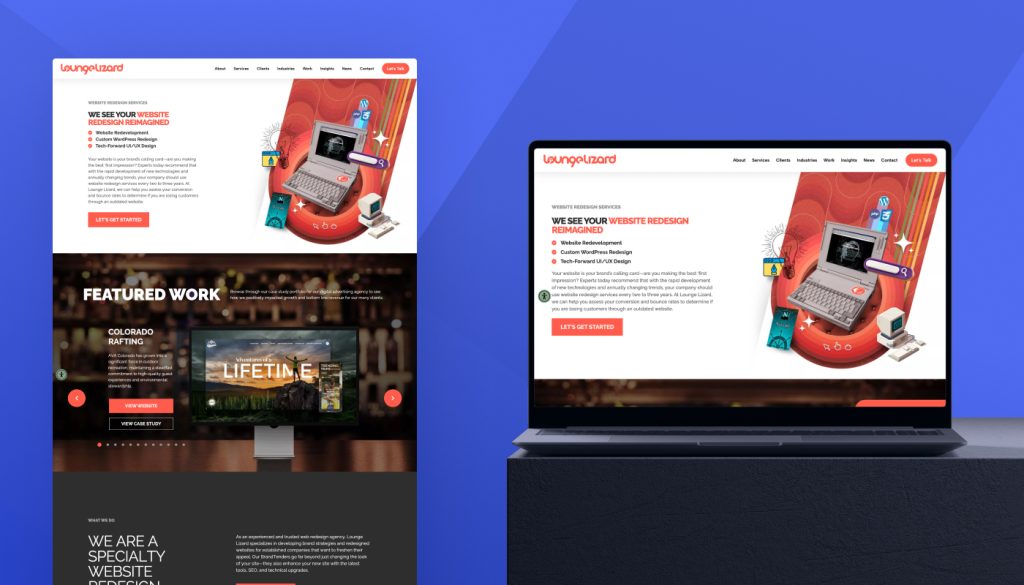
Digital Silk, WebFX, & Lounge Lizard: Best for enterprise, multi-stakeholder, full-service strategy through launch
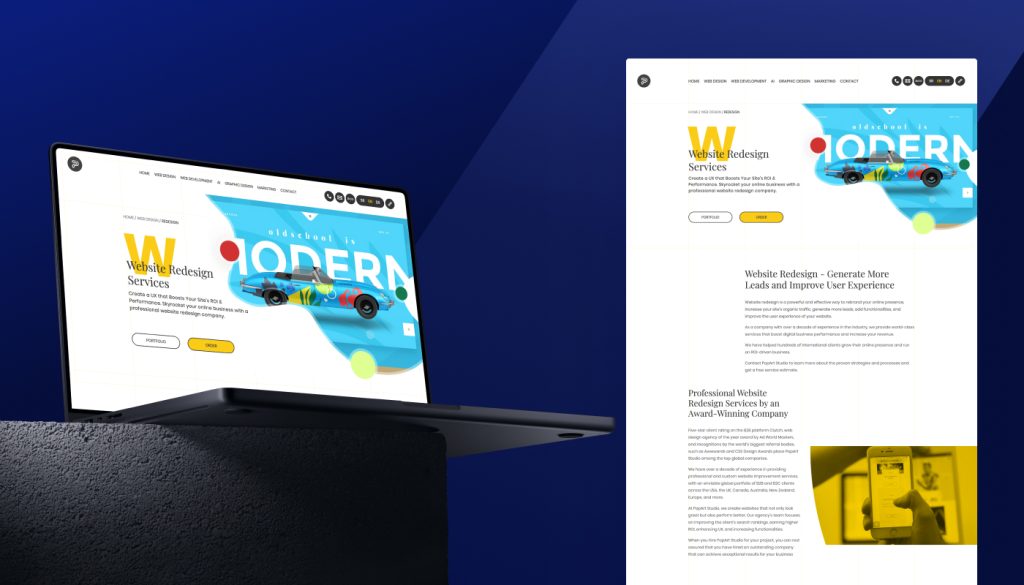
PopArt Studio: Best for cost-conscious, international eCommerce and outsourced production support
What best website redesign companies you should consider
Website development companies for website redesign projects offer different expertise, from strategy and UX to SEO, platform migration, and post-launch support. We shortlisted ten companies that cover website redesign needs from different angles: GetDevDone, Phenomenon Studio, Blacksmith Agency, Finsweet, O8 Agency, Bop Design, Digital Silk, WebFX, Lounge Lizard, and PopArt Studio.
GetDevDone is the right choice when the direction is set, and execution is the main risk. The other companies are stronger in strategy, UX, branding, Webflow, B2B positioning, SEO, or full-service redesigns.
Compare website redesign companies by project fit
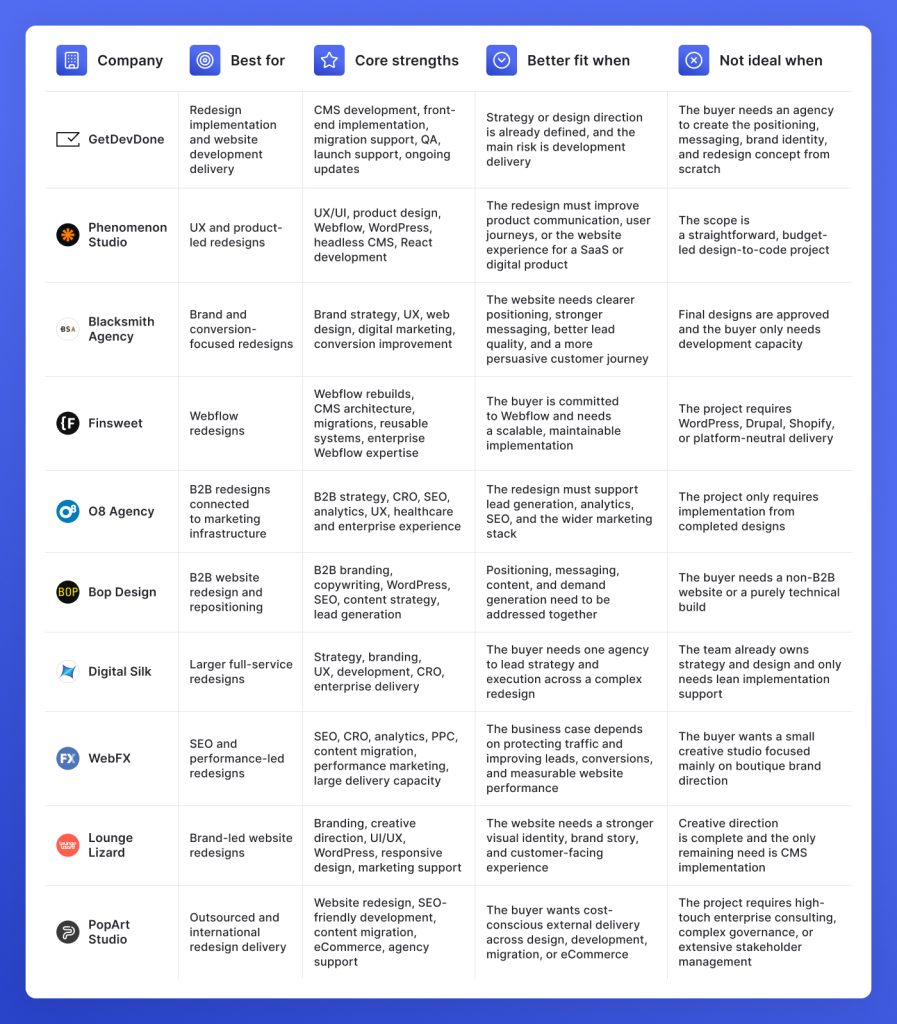
Sometimes redesign companies offer overlapping services, which makes it hard to see where they differ. This table compares each provider by its strongest use case, core capabilities, ideal project scope, and limitations, so you can narrow the shortlist faster.
How we selected the top 10 website redesign companies
We selected companies with proven website redesign work and the technical capability to carry projects through development. Our review covered service pages, case studies, portfolios, Clutch profiles, and client feedback, with a focus on CMS rebuilds, migrations, SEO, UX, performance, QA, launch, and post-launch support.
Project fit mattered more than awards or review volume. We compared each company by its strongest use case, delivery model, and limitations, and evaluated GetDevDone against the same criteria.
7 checks to make before choosing a website redesign company
A website redesign can fail even when the new site looks better. Before hiring a company, decide what still needs to be defined, which platform the site will use, how SEO will be protected, and who will own the website after launch.
Decide whether you need strategy or implementation
Discover whether the redesign direction already exists. A full-service agency makes sense when positioning, messaging, information architecture, UX, and visual direction still need to be worked out. Choose a development partner when the strategy, designs, or technical scope are already approved.
Match the company to your CMS and platform
Platform experience matters because a WordPress redesign is delivered differently from a Webflow rebuild, a headless CMS project, or a Shopify store migration. Ask which platforms the company works with regularly and whether its experience covers your specific setup.
WordPress suits many content and marketing websites.
Webflow works well for design-led sites managed by marketing teams.
Shopify requires eCommerce, catalog, checkout, and integration experience.
Drupal is commonly used for websites with complex content structures, permissions, integrations, or governance requirements.
Headless CMS projects need separate front-end and deployment expertise.
A platform-neutral partner may be more useful when the final stack has not yet been chosen.
Require a detailed SEO preservation plan
A redesign can improve the website while damaging existing search visibility. The company should explain how it will preserve URLs, metadata, internal links, structured data, analytics, and content during the move. Ask who owns the redirect map, content migration, crawl testing, indexation checks, and post-launch monitoring. Redirects and metadata should be tested before release, while analytics continuity and crawlability should be checked immediately after launch.
Separate visual design from UX and conversion work
A visual refresh of the digital design changes how the site looks. A UX-led redesign changes how users navigate, find information, and complete tasks. A CRO-led redesign focuses more directly on actions such as submitting a form, booking a demo, creating an account, or completing a purchase. Choose based on the problem. New colors and layouts will not fix unclear navigation, weak messaging, poor mobile flows, or forms that lose qualified leads. Ask the company how it identifies usability and conversion problems before proposing design changes.
Choose a delivery model that fits the agency workflow
Agencies do not always need another public-facing strategy partner. They may need a behind-the-scenes development team that works from approved designs, follows the agency’s project-management process, and keeps the existing client relationship unchanged. Check whether the company supports white-label delivery, controlled client communication, repeatable handoffs, and work across several concurrent projects. A strong production partner should reduce delivery pressure.
Define post-launch ownership before development starts
The handoff should cover more than access credentials. Marketing teams need to know how to edit content, create new pages, use reusable components, and publish changes without breaking the site. Ask what documentation and training are included, who handles bugs after launch, and whether maintenance, monitoring, security updates, and performance work require a separate agreement.
Verify relevant proof
Review the company’s redesign service pages, case studies, portfolio, platform experience, and Clutch reviews. Look for projects that match your CMS, delivery model, business type, and redesign goals. The evidence should show how the company handles discovery, development, migration, QA, launch, and support. Ask who worked on the referenced projects, what the company owned, and whether the same team and process will apply to your engagement.
Make your website work.
One-day fix, remediation path, or a complete CMS website.
Some companies are strongest at turning approved designs into a finished website. Others are better suited to strategy, UX, SEO, Webflow, B2B positioning, or larger full-service redesigns. The companies below are grouped by the type of project they handle best.
GetDevDone
Best for: Agencies, marketing teams, and businesses that already have a redesign direction and need the website developed, migrated, tested, launched, and supported after release.
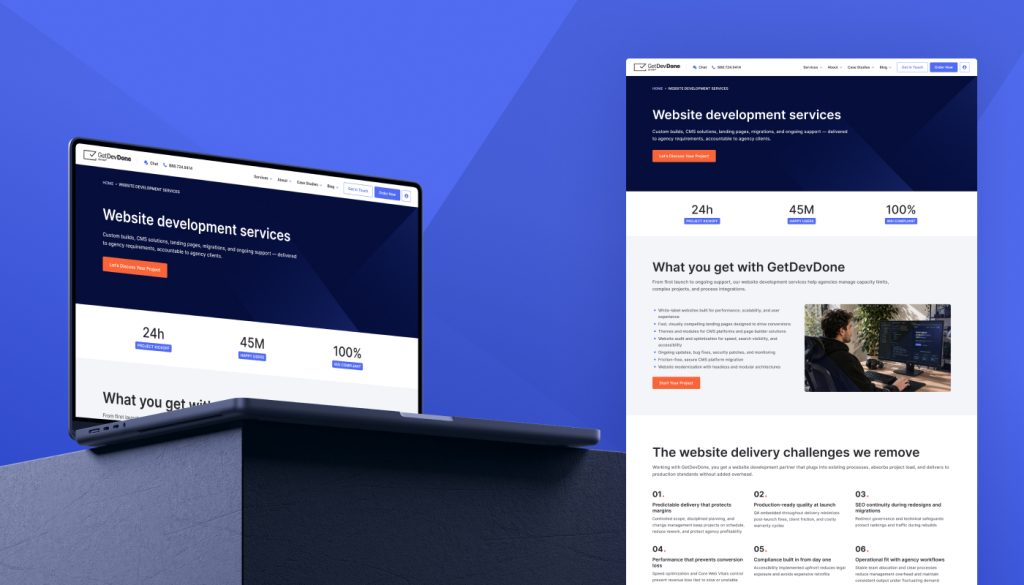
Why it is included: GetDevDone is built around the delivery stage of a redesign. The team can take approved designs or an agreed technical scope and turn them into a production-ready website, covering front-end development, CMS setup, content migration, QA, performance, SEO continuity, and launch preparation. Its white-label and team-extension models suit agencies that need extra capacity without changing how they manage the client relationship.
Relevant services:
Custom website and front-end development
WordPress, Webflow, Drupal, Craft CMS, and HubSpot CMS development
Headless CMS implementation and modernization
CMS and content migration
Cross-browser and real-device QA
Performance, accessibility, and technical SEO improvements
Launch support and release readiness
Ongoing updates, maintenance, and monitoring
Evidence:
GetDevDone has delivered redesigns across headless CMS, content-heavy websites, and Shopify builds with work spanning information architecture, migration, performance, accessibility, SEO, QA, and launch. Clutch reviews also point to reliable communication, smooth collaboration, and the team’s ability to fit into existing agency workflows. GetDevDone supports fixed-price projects, team extensions, retainers, and post-launch work, which makes it practical for both one-off redesigns and ongoing production support.
Engine Room: A content-first redesign for a leading VFX studio
Engine Room produces thousands of custom VFX shots each year for clients including Warner Bros, Disney, and Netflix. GetDevDone redesigned its website to bring that work to the forefront through showreel-led pages, intuitive navigation, and fast video performance across devices.
Strong fit for redesigns with an approved strategy, design, or scope
Agency-friendly white-label and team-extension workflows
CMS, front-end, migration, QA, and launch work within one delivery model
Experience across traditional, headless, and eCommerce platforms
SEO, accessibility, and performance handled during implementation
Continued support after launch
Limitations: GetDevDone is less suitable when the project still needs a brand agency to define the company’s positioning, messaging, visual identity, and full redesign concept from the ground up.
Phenomenon Studio
Best for: SaaS, product, B2B, and consumer brands that need a UX-led website redesign tied to stronger user journeys, clearer product communication, and better conversion performance.
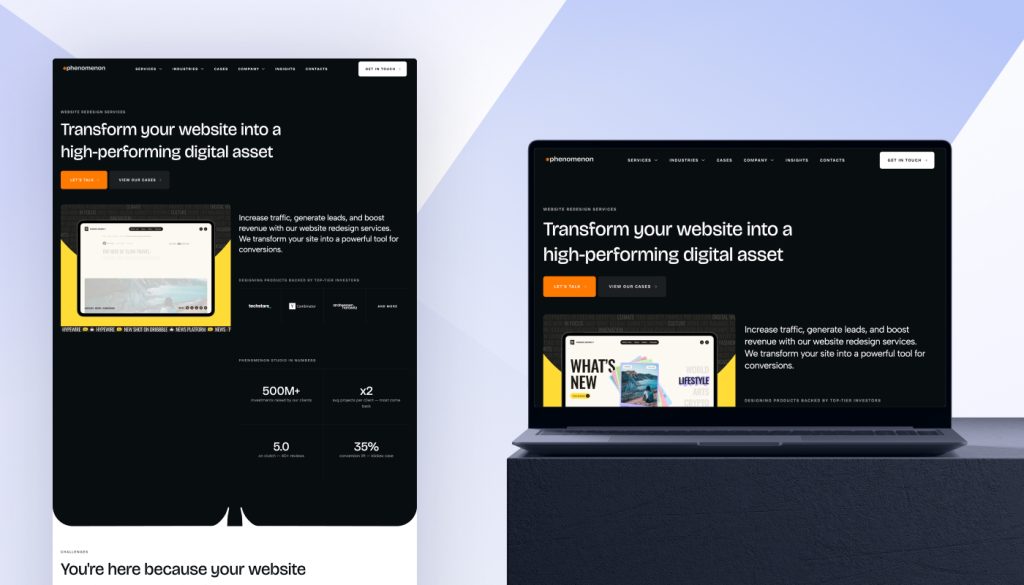
Why it is included: Phenomenon Studio earned a place on this list for UX-led redesigns of SaaS and digital-product websites. The team goes beyond visual design by reworking product communication, user journeys, information architecture, and conversion paths, then carrying that logic into Webflow, WordPress, React, or headless CMS development. It is a strong choice when the website must make a complex product easier to understand and use, not simply give the brand a new look.
Relevant services:
UX and website audits
Customer journey and user-flow redesign
Sitemap and content architecture
Responsive UX/UI design
B2B and B2C website redesign
WordPress website redesign
Webflow, React, and headless CMS delivery
SEO migration planning and QA
Analytics setup, launch support, and post-launch optimization
Evidence: Phenomenon Studio backs its UX-led positioning with a detailed redesign process. The team uses stakeholder research, UX audits, heatmaps, journey mapping, wireframes, and reusable design systems to identify where the website loses clarity or conversion. It also handles the implementation layer across Webflow, WordPress, React, and headless CMS, including SEO migration, analytics, QA, and launch support.
Its portfolio includes technology and product-focused websites, such as the Webflow project for Shaga Odyssey. Client feedback points to strong interface work and commercial thinking, which makes Phenomenon Studio especially relevant for SaaS and digital-product redesigns.
Strengths:
Strong discovery and UX research process
Clear focus on customer journeys and interface improvement
Product and SaaS-oriented design experience
Design systems built for development handoff
SEO, accessibility, and performance considered before launch
Support across design, development collaboration, QA, and optimization
Limitations: Phenomenon Studio may be more than a buyer needs when the redesign is already fully specified, and the remaining scope is limited to straightforward, cost-conscious design-to-code production.
Blacksmith Agency
Best for: Companies that need a website redesign to sharpen brand presentation, clarify the customer journey, and turn more qualified visitors into leads.
Why it is included: Blacksmith Agency redesigns that need to improve both brand presentation and lead generation. The team combines positioning, messaging, UX, web design, development, SEO, and paid media within one engagement, rather than treating the website as a standalone creative project. This makes it relevant for B2B, SaaS, professional services, and eCommerce companies that need a stronger customer journey and more qualified leads.
Relevant services:
Brand strategy and visual branding
Custom and responsive web design
UI/UX design
Content strategy and wireframing
WordPress development
Shopify, Magento, and eCommerce development
Technical SEO and content optimization
PPC and conversion-focused marketing support
QA, launch, monitoring, and ongoing optimization
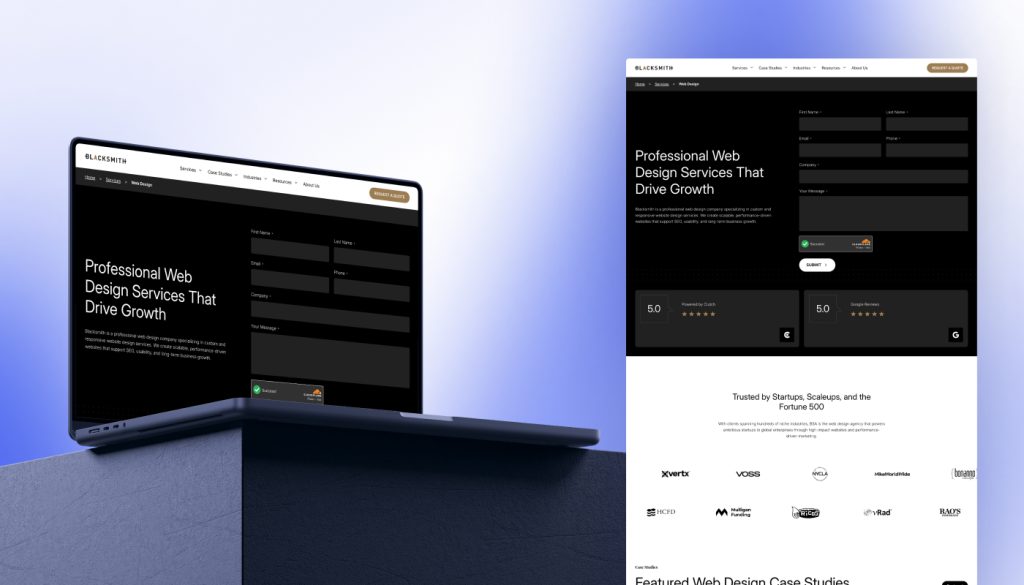
Evidence: Blacksmith’s web design offer combines visual branding, custom design, UI/UX, responsive layouts, WordPress, and eCommerce work. Published project evidence shows the redesign work tied to measurable business outcomes. For Montium, Blacksmith rebuilt the website and PPC program, reporting ten times more leads and an 87% lower cost per lead. For Tianma America, the team restructured product pages, improved filtering and quote paths, and reduced load times by 86.67%. Client testimonials reference redesign and launch delivery, increased engagement and conversions, and doubled monthly traffic.
Strengths:
Brand, UX, development, and marketing handled within one engagement
Strong fit for redesigns tied to lead quality and conversion
Discovery process grounded in business goals and KPIs
Experience with B2B, SaaS, professional services, and eCommerce websites
SEO and performance considered during design and development
Post-launch monitoring and optimization support
Limitations: Blacksmith Agency may not be the most efficient fit when positioning, messaging, UX, and visual design are already finalized, and the buyer only needs a development team to implement approved files.
Finsweet
Best for: B2B and enterprise teams planning an end-to-end website redesign on Webflow, including strategy, copy, design, development, migration, and launch.
Why it is included: Finsweet is a strong fit when the buyer has already chosen Webflow and wants one team to own the entire redesign. Its process covers the work around the build as well as the build itself, from discovery and page-level messaging to visual systems, CMS architecture, SEO migration, training, and handoff. The company is relevant for sites that have outgrown an earlier setup and now need a more scalable platform for marketing, content, and future growth.
Relevant services:
Website redesign strategy and discovery
Messaging and copy support
Visual design and motion
Webflow development
CMS architecture and reusable components
WordPress, Wix, Drupal, and headless CMS migrations to Webflow
Technical SEO, schema, and AI search readiness
Redirect mapping and launch support
Team training, documentation, and ongoing Webflow work
Evidence: The company is a Webflow Premium Partner at the Enterprise tier and has built widely used tools and systems for the Webflow ecosystem. Its recent redesign work includes Valius Sciences, Mindbloom, and RVO Health. Client feedback also points to faster production, close collaboration, ongoing embedded support, and measurable outcomes, including a 102% increase in average time on site after launch.
Strengths:
Deep specialization in Webflow redesigns
Strategy, copy, design, development, and migration under one team
Strong CMS structure and reusable component systems
Clear SEO preservation and launch process
Practical training and handoff for marketing teams
Ongoing support after the redesign goes live
Limitations: Finsweet is not a platform-neutral redesign partner. It is best suited to buyers committed to Webflow, including those migrating from WordPress, Wix, Drupal, or a headless CMS into the platform.
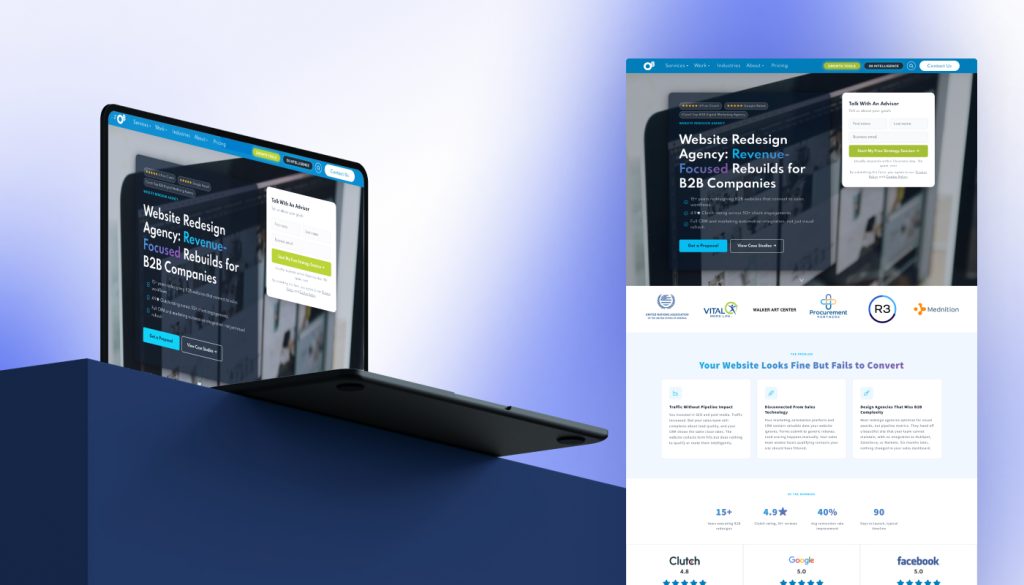
O8 Agency
Best for: Businesses that need a website redesign tied to lead quality, CRM integration, SEO, CRO, analytics, and revenue attribution.
Why it is included: O8 Agency approaches redesign as part of the sales and marketing system. The work begins with conversion paths, CRM gaps, lead qualification, and attribution, then moves into information architecture, messaging, design, development, and launch. Therefore, O8 Agency is a credible fit when the website must support a longer B2B buying cycle, multiple stakeholders, and measurable pipeline goals.
Relevant services:
B2B website redesign
UX and conversion architecture
Content strategy and messaging
SEO and CRO
WordPress, HubSpot CMS, Drupal, and Webflow development
HubSpot, Salesforce, Marketo, and Pardot integrations
Lead scoring and automated routing
GA4, CRM attribution, and conversion tracking
Content migration, launch QA, and post-launch optimization
Evidence: The company reports a 4.9 Clutch rating across more than 50 engagements and positions its typical redesign timeline at about 90 days. Its case-study library shows redesign and migration work across healthcare, education, and enterprise environments. Examples include a multilingual Drupal redesign for HelpSystems, and WordPress and Drupal migrations for Ecumen and the University of Minnesota. Other published results include 4x more B2B leads for R3 Continuum and doubled eCommerce conversions for GenoPalate.
Strengths:
Strong connection between website work and B2B revenue goals
Native CRM and marketing automation integration
Lead qualification and routing built into the redesign
Experience with complex sales cycles and stakeholder groups
Broad CMS capability across WordPress, HubSpot, Drupal, and Webflow
Detailed analytics and post-launch performance reporting
Limitations: O8 Agency may be more than necessary when strategy, content, UX, and design are already complete, and the buyer only needs a lean development team to build approved pages.
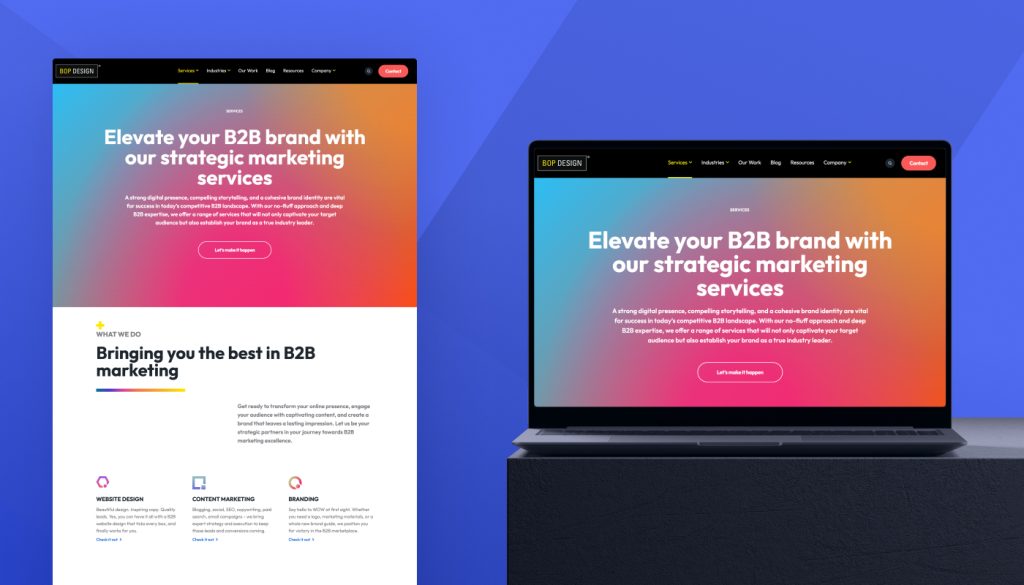
Bop Design
Best for: Marketing teams that need a website redesign to sharpen positioning, improve copy and search visibility, and generate more qualified leads.
Why it is included: Bop Design is built around the specific demands of B2B marketing websites. Its work combines brand positioning, website design, copywriting, WordPress development, SEO, and ongoing marketing, which suits companies whose current site no longer explains a complex offer clearly or supports the sales process. The fit is strongest when the redesign needs to bring messaging, content, design, and lead generation into the same project.
Relevant services:
B2B website strategy and design
UI/UX design
Brand positioning and visual identity
Website copywriting
WordPress design and development
Content migration
SEO and GEO
Conversion optimization
Ongoing content and digital marketing support
Evidence: For Kaseware, Bop Design migrated the website to WordPress, integrated HubSpot, preserved SEO, cut page-load time by 30%, and maintained 99.99% uptime. For Conrac Solutions, the team paired a full website redesign with new copy and an interactive map that made a specialized B2B offer easier to understand. Clutch reviews also mention scalable WordPress builds, responsive project management, and websites that internal teams can manage after launch.
Strengths:
Clear specialization in B2B websites
Positioning, copy, design, and development in one engagement
Strong WordPress and content migration experience
SEO and lead generation tied into the redesign
Experience translating complex services into clearer website messaging
Consistent client feedback on communication and project management
Limitations: Bop Design may be less relevant for consumer brands, eCommerce-first businesses, or projects that only require technical implementation from finished designs.
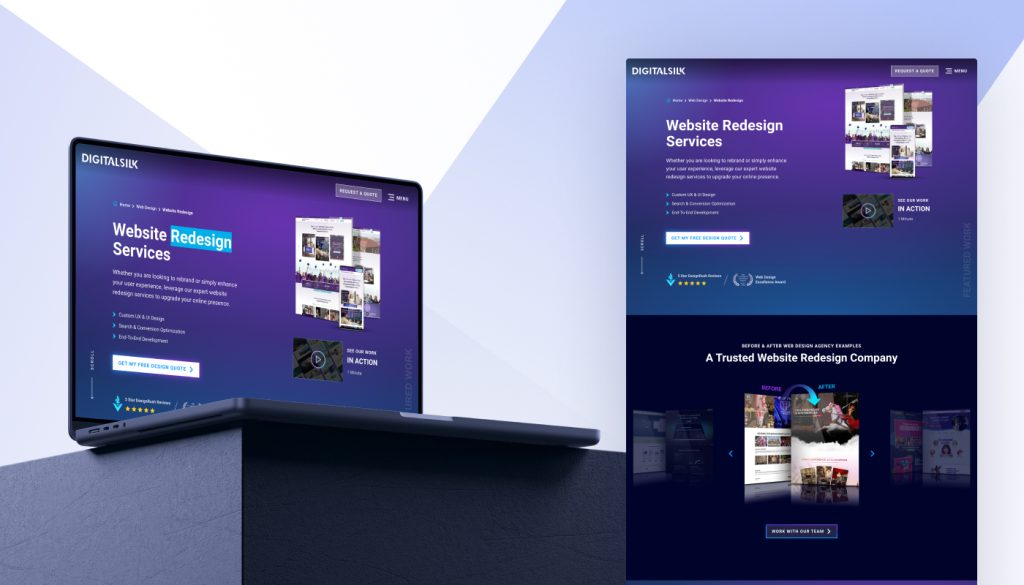
Digital Silk
Best for: Mid-market and enterprise organizations that need one agency to lead a larger redesign across strategy, brand, UX, development, SEO, conversion, launch, and ongoing optimization.
Why it is included: Digital Silk is suited to redesigns where the website problem reaches beyond an outdated interface. Its process addresses target audiences, positioning, messaging, information architecture, conversion paths, content strategy, responsive design, CMS selection, QA, and post-launch growth. That breadth makes it relevant when several teams and business priorities need to come together in one coordinated engagement.
Relevant services:
Website redesign strategy and competitor research
Brand positioning and messaging
Information architecture and user-flow planning
Custom UX/UI design
B2B and eCommerce website redesign
CMS selection and development
SEO and conversion optimization
Accessibility and responsive development
QA, launch, maintenance, and ongoing optimization
Evidence: Digital Silk defines the audience and value proposition, analyzes performance and user pain points, rebuilds navigation and conversion paths, develops the site across devices, and sets up monitoring after launch.
Its case studies show experience with complex redesigns. For TRC Healthcare, Digital Silk restructured the portfolio, simplified technical messaging, and reported a 93.14% increase in active users and a 6.1% rise in views per session. The Portland Public Library redesign led to a 47.82% increase of average engagement time per active user.
Strengths:
Broad ownership from strategy through launch
Strong information architecture and UX capability
Branding, messaging, development, and optimization within one engagement
Experience with healthcare, education, B2B, and public-facing organizations
Accessibility and CMS usability included in the redesign process
Post-launch monitoring and maintenance support
Limitations: Digital Silk may be too broad or high-touch when the buyer already has approved strategy and designs and only needs a focused development team to implement them.
WebFX
Best for: Marketing teams that want a website redesign connected to SEO, CRO, content, paid media, analytics, and measurable revenue performance.
Why it is included: WebFX is a good choice when the redesign is part of a wider growth program. Its teams can handle custom design, development, platform work, site optimization, launch, and ongoing marketing, while its in-house technology supports attribution and performance tracking. This approach suits companies that want the new site to improve visibility, lead generation, and conversion after launch.
Relevant services:
Website redesign strategy and custom design
UX/UI and responsive development
WordPress, Drupal, Shopify, and Webflow development work
SEO and technical optimization
Conversion rate optimization
Website copywriting and content marketing
PPC and paid media support
Analytics and revenue tracking
Site launch, maintenance, and ongoing updates
Evidence: WebFX turns website redesign into an all-in-one engagement covering custom design, end-to-end development, SEO, CRO, launch, and access to its proprietary RevenueCloudFX platform. Its redesign experience spans SMB, B2B, eCommerce, franchise, multi-location, and enterprise websites, with platform support across WordPress, Drupal, Shopify, and Webflow.
Published project evidence includes a four-site consolidation for Cleveland Brothers that produced a 37% increase in conversions. Verified Clutch reviews also show WebFX modernizing a software company’s WordPress site with reusable templates and increasing organic traffic by 5-10%.
Strengths:
Large in-house team with broad marketing and technical coverage
Strong connection between redesign, SEO, CRO, and lead generation
Support across major CMS and eCommerce platforms
Proprietary analytics and revenue-attribution technology
Capacity for larger, ongoing engagements
Maintenance and optimization available after launch
Limitations: WebFX may be high-touch when the strategy and designs are already approved and the buyer only needs a focused implementation team.
Lounge Lizard
Best for: Established companies that want a brand-led website redesign combining creative direction, UI/UX, custom WordPress development, responsive design, and marketing support.
Why it is included: Lounge Lizard is a credible fit when the website no longer reflects the company’s current brand or gives users a convincing reason to engage. Its process can start with rebranding and brand strategy, then move through wireframes, visual design, content, development, testing, and launch. The company is relevant for buyers who still need the redesign concept shaped.
Relevant services:
Brand strategy and rebranding
Custom website redesign
UI/UX and responsive web design
Custom WordPress development
eCommerce website redesign
Content creation and optimization
SEO and Core Web Vitals improvements
Conversion rate optimization
Hosting, maintenance, and digital marketing support
Evidence: Lounge Lizard’s redesign offer combines brand strategy, UI/UX, responsive development, WordPress, eCommerce, SEO, content, and ongoing support. Published work includes a new website and brand for Blue Owl associated with a reported 200% increase in organic traffic, a multilingual Eurosort website with a 94% on-page SEO score, and a cinematic brand concept for Vilogics associated with a 200% increase in leads. Client feedback points to improved brand consistency, easier content updates, stronger navigation, and close collaboration throughout delivery.
Strengths:
Brand strategy and website design handled together
Strong creative direction and visual identity work
UI/UX, content, development, and SEO within one engagement
Custom WordPress and eCommerce capability
Responsive design and performance optimization
Maintenance and marketing support available after launch
Limitations: Lounge Lizard may not be the most efficient choice when the buyer only needs a behind-the-scenes development team to implement approved changes.
PopArt Studio
Best for: Agencies that need outsourced website redesign support, including custom UX/UI, WordPress or eCommerce development, content migration, and SEO-conscious delivery.
Why it is included: PopArt Studio covers both direct client work and outsourced delivery for other agencies. The team can take on the full redesign or supply additional resources when an agency lacks capacity, while adapting its level of client involvement to the engagement. The company is a practical option for cross-border projects where budget, delivery flexibility, and access to design, development, and marketing skills matter.
Relevant services:
Custom and responsive website redesign
UI/UX design and usability testing
WordPress and custom CMS development
WooCommerce and eCommerce redesign
Content and platform migration
SEO preservation and redirect planning
Copywriting, branding, and digital marketing
Agency outsourcing and additional delivery capacity
Evidence: PopArt Studio’s redesign scope covers industry research, UX/UI, content migration, responsive design, performance, conversion, and search visibility.
Public testimonials describe projects for clients in the US and UK, including a healthcare consultancy rebrand, a medical website with payment and booking functionality, and an internal portal redesign where 95% of surveyed employees were satisfied with the result. The wider client list spans local businesses, institutions, software companies, and international brands across Europe and North America.
Strengths:
Experience supporting agencies as an outsourced delivery partner
Broad coverage across design, development, eCommerce, SEO, and migration
International delivery experience across B2B and B2C projects
Custom builds
Clear focus on preserving SEO during migration
Flexible involvement based on the agency or client workflow
Limitations: PopArt Studio doesn’t fit enterprise redesigns that require extensive governance, complex stakeholder management, or formal accessibility programs.
Website redesign companies for 7 common project scenarios
Best for redesign implementation and agency delivery
GetDevDone is the strongest fit when an agency or marketing team already has an approved direction and needs CMS implementation, front-end development, migration, QA, launch support, and ongoing website updates.
For outsourced agency delivery with flexible support across UX/UI, WordPress, eCommerce, content migration, and SEO-conscious redesigns, PopArt Studio is worth considering.
Larger projects that extend beyond implementation into SEO, CRO, analytics, maintenance, and digital marketing are better suited to WebFX.
Best for B2B website redesigns
When the redesigned website must connect lead generation with CRM systems, marketing automation, conversion tracking, and revenue attribution, O8 Agency is a proven choice.
B2B companies that need positioning, copy, WordPress development, SEO, and demand generation handled within one project should consider Bop Design.
For B2B and enterprise teams rebuilding on Webflow with stronger messaging, content architecture, and a scalable CMS, Finsweet is the better fit.
Best for Webflow redesigns
For end-to-end Webflow redesigns covering strategy, copy, visual design, development, migration, SEO, and team training, Finsweet works best.
When agencies and marketing teams already have a redesign direction and need reliable Webflow implementation, QA, integrations, launch support, or additional production capacity, it’s better to involve GetDevDone.
Phenomenon Studio works well when the Webflow rebuild also requires UX research, customer journey improvements, product communication, and a new design system.
Best for SEO and performance-led redesigns
For redesigns tied to SEO, CRO, content, analytics, paid media, and measurable post-launch growth, WebFX is the strongest option.
When technical SEO, CRM attribution, conversion paths, and analytics continuity must support a longer B2B sales process, O8 Agency is a better match.
Cost-conscious projects that still require content migration, redirect planning, SEO preservation, load-speed improvements, and conversion work can consider PopArt Studio.
Where the main risk lies in technical delivery, including redirects, content migration, Core Web Vitals, QA, and production readiness, GetDevDone fits best.
Best for brand-led redesigns
When brand strategy or rebranding needs to carry through creative direction, content, UI/UX, development, and launch, Lounge Lizard is a strong choice.
Projects that need to connect brand presentation and messaging with customer journeys, lead quality, SEO, and conversion performance are well aligned with Blacksmith Agency.
Larger brand transformations involving research, positioning, information architecture, UX, development, and post-launch optimization are better suited to Digital Silk.
B2B companies that want a refreshed identity translated into clearer copy, sharper positioning, and a lead-generating website can involve Bop Design.
Best for UX/product-led redesigns
Phenomenon Studio is well suited to SaaS and digital-product websites where the redesign must improve user journeys, product communication, interface logic, and conversion.
When UX problems are closely tied to unclear messaging, weak navigation, and low-quality lead generation, Blacksmith Agency can get you covered.
For larger UX redesigns that involve several audiences, complex content structures, accessibility requirements, and coordinated development, it’s better to hire Digital Silk.
Best for larger or enterprise redesign projects
Larger redesign programs that combine brand strategy, UX, content, development, CMS delivery, accessibility, and ongoing optimization are well suited to Digital Silk.
WebFX works better when a large website also needs broad platform support, analytics, SEO, CRO, and continued marketing after launch.
Enterprise teams committed to Webflow should consider Finsweet for structured CMS collections, migration, SEO preservation, and content governance.
Established organizations planning a major brand refresh, multilingual or multi-page delivery, and ongoing marketing support are a closer match for Lounge Lizard.
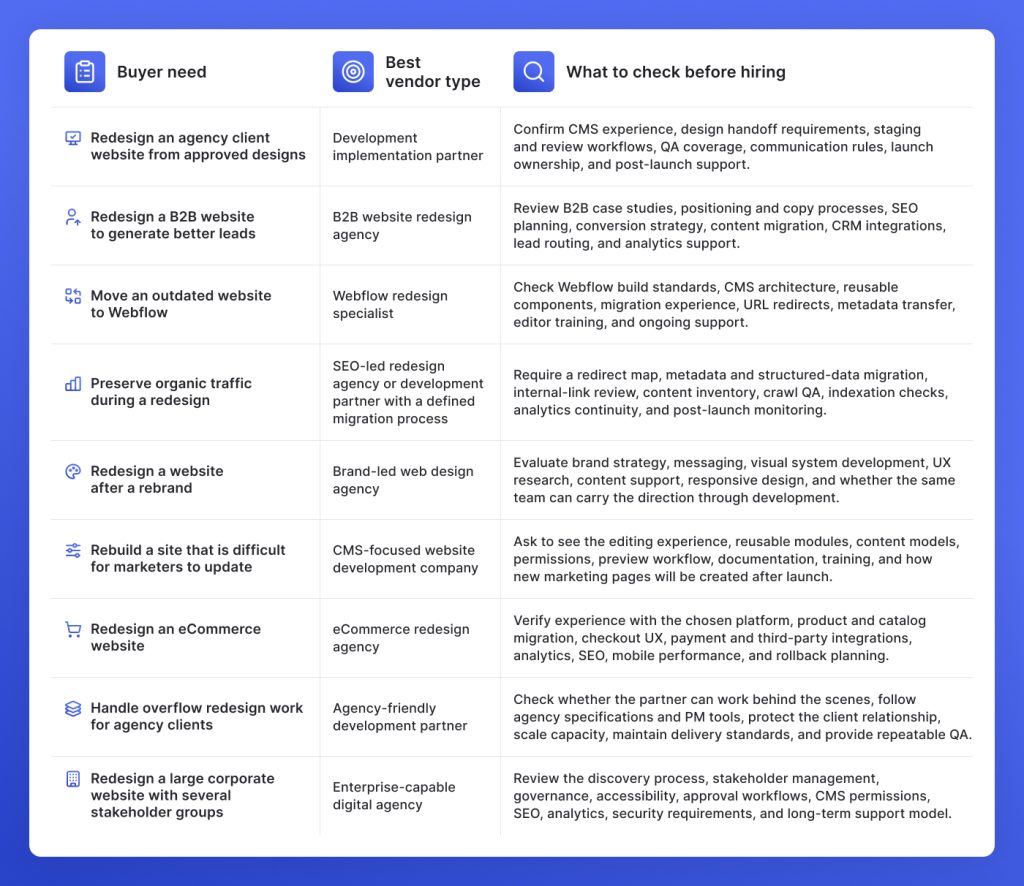
The final check before hiring a website redesign partner
Use your project scenario to identify the right vendor model, then pressure-test each candidate against the delivery capabilities, safeguards, and handoff requirements that should be agreed before signing.
Editorial disclaimer
This is not an independent research report, analyst ranking, sponsored placement, or paid directory listing. The companies included in this article were identified and evaluated using publicly available information available at the time of publication, including company websites, service pages, case studies, portfolios, and verifiable third-party review platforms, combined with AI-assisted research and human editorial review conducted by the GetDevDone team. The selection and ordering of companies reflect our editorial judgment regarding their visible relevance to website redesign projects and capabilities based on the criteria discussed in this article. Different agencies, project requirements, budgets, and operating models may reasonably lead to different conclusions. We have made a good-faith effort to evaluate companies based on verifiable public information rather than marketing claims alone. However, this list is not exhaustive, definitive, or free from an editorial perspective.
FAQ about website redesign companies
A website redesign company usually owns more of the strategic and creative work. Depending on the vendor, that may include positioning, messaging, UX research, information architecture, copywriting, visual design, conversion planning, and development.
A website development company is often the better fit when the redesign direction is already defined. It can take approved designs or a documented scope and handle CMS implementation, front-end development, migration, QA, launch, and post-launch support. The right choice depends on whether the main unresolved risk is strategy or delivery.
An agency brings in a redesign partner when the internal team lacks capacity, platform expertise, or enough time to meet a fixed client deadline. External support is useful for CMS rebuilds, migrations, large QA cycles, accessibility work, performance fixes, or simultaneous client launches. The partner should fit the agency’s delivery model. Check whether it can work from agency specifications, use your project tools, communicate through agreed channels, support white-label delivery, and hand the completed website back cleanly.
Choose a full-service redesign agency when positioning, messaging, content structure, UX, and creative direction are still unresolved. This model works best when the buyer needs help deciding what the new website should say, how it should work, and how it should look. A development implementation partner is the best fit when strategy, designs, or scope are already approved, and the larger risk is execution. The partner should be able to build the CMS, migrate content, preserve SEO, test the site, manage launch readiness, and support the website after release without reopening decisions that have already been made.
Start with direct evidence of redesign work. Review the company’s redesign service pages, relevant case studies, CMS and platform experience, and verified client reviews. The proof should match your project type, whether that means WordPress, Webflow, Drupal, Shopify, headless CMS, B2B marketing, eCommerce, or enterprise delivery. Then evaluate the process. Ask how the team handles discovery, content migration, SEO preservation, responsive development, QA, staging, launch, and post-launch support. Clarify who will communicate with you, who owns each deliverable, how changes affect cost and timing, and whether the same team presented during sales will work on the project.
Choose an SEO-led redesign agency or a development partner with a documented SEO migration process. The team should treat search preservation as part of the build. At minimum, the scope should cover URL mapping, redirects, metadata, canonical tags, structured data, internal links, content migration, analytics continuity, sitemap updates, crawl QA, indexation checks, and page performance. Ask who owns each item, when it will be tested, and how rankings, crawl errors, and traffic will be monitored after launch.
The most expensive redesign failures come from weak planning. Common problems include lost rankings, broken redirects, incomplete content migration, missing analytics, slow pages, inconsistent responsive layouts, difficult CMS editing, weak accessibility, and unclear ownership during launch. Projects also run into trouble when strategy changes during development, stakeholders approve work too late, or the vendor underestimates integrations and QA. Reduce that risk by agreeing on scope, responsibilities, acceptance criteria, migration plans, testing coverage, launch ownership, and post-launch support before design or development begins.
TL;DR Agencies grow by building better production systems, not just hiring more people. Data from 285 agencies shows that structured, standardized processes make results predictable and protect a healthy 12% profit margin. Every decade rewrites the rules of agency growth.A few years ago, it was scale through people — more designers,…
Talk to a commerce advisor to define the right architecture, platforms, and growth model for your business.
Get guidance on configuration, scalability, and compliance — tailored to your market and goals.